Thursday, January 29, 2026
Home Blog Page 27

Farhan Yousaf to lead Pakistan U19 in ACC Asia Cup

0

Farhan Yousaf, who featured in last year’s ACC U19 Asia Cup, will lead Pakistan U19 in the upcoming edition of the tournament, scheduled to take place in Dubai from 12 to 21 December. The 50-over event will feature eight teams.

Pakistan, who were beaten by Bangladesh in last year’s semi-final, are placed in Group ‘A’ alongside India, Qualifier 1 and Qualifier 3. Group ‘B’ comprises Afghanistan, Bangladesh, Qualifier 2 and Sri Lanka.

The eight-team tournament will provide Pakistan side with preparations ahead of the ICC U19 World Cup, which is set to be co-hosted by Zimbabwe and Namibia from 15 January to 6 February 2026.

Pakistan will open their campaign on Friday, 12 December against Qualifier 3 at The Sevens Stadium in Dubai. Their second group match is against India on Sunday, 14 December at the ICC Academy Ground in Dubai, while their final group fixture is against Qualifier 1 on Tuesday, 16 December at the same venue.

The semi-finals will be played on 19 December at The Sevens Stadium and ICC Academy Ground, while the final will take place on Sunday, 21 December.

The 18-year-old Farhan recently led Lahore Region Whites in the National Men’s U19 Cup, scoring 369 runs from seven matches, including a century and two half-centuries. Usman Khan, who scored a century in the last edition of the ACC U19 Asia Cup, will be Farhan’s deputy in the event.

Playing for FATA in the National Men’s U19 Cup, left-handed Usman scored 429 runs from seven matches, which included two centuries and a half-century.

Pakistan team will undergo a camp in Karachi from later today until the team’s departure for Dubai, which will be confirmed in due course.

15-member squad:

Farhan Yousaf (captain), Usman Khan (vice-captain), Abdul Subhan, Ahmed Hussain, Ali Hassan Baloch, Ali Raza, Daniyal Ali Khan, Hamza Zahoor (wk), Huzaifa Ahsan, Momin Qamar, Mohammad Huzaifa, Mohammad Sayyam, Mohammad Shayan (wk), Niqab Shafiq and Sameer Minhas

Non-traveling reserve players:

Abdul Qadir, Hasnain Dar, Mohammad Hassan Khan, Ibtisam Azhar and Umar Zaib

Support staff:

Sarfaraz Ahmed (manager/mentor), Shahid Anwar (head coach/batting coach), Rao Iftikhar (bowling coach), Mansoor Amjad (fielding coach.), Abrar Ahmed (trainer), Ubaidullah (physio), Ali Hamza (analyst)

OGRA hikes LPG price by Rs87 as global pricing standard rises

0

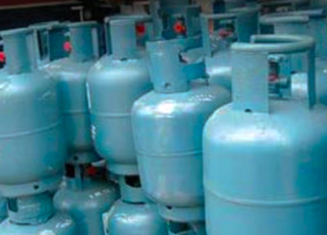
The Oil and Gas Regulatory Authority (Ogra) has increased the maximum retail price of LPG by Rs87.21 per 11.8-kg cylinder, effective December 1 2025.

The new price of the cylinder stands at Rs2,466.10.

OGRA has set the producer price for LPG at Rs167,691.40 per ton, which is up from Rs160,300.43 in November, registering an increase of Rs7,390.97 per ton. Consumer prices have followed the same rise which have hit Rs208,991.40 per ton in December.

The regulator said the upward revision has reflected a 4.93 per cent jump in the reference price from Saudi Aramco-CP. There has been a 0.15 per cent decline in the average US dollar–rupee exchange rate.


Inflation holds at 6.1% as calls grow for sharp interest rate cuts

0

The inflation rate stayed above 6.1% for the second consecutive month, but the underlying inflationary pressure receded in November amid strong calls to cut interest rates to reflect ground realities.

The Pakistan Bureau of Statistics (PBS) reported on Monday that the headline inflation rate remained stable at around 6.1% in November compared to a year ago. But the other two indicators, the monthly inflation and non-food, non-energy inflation, decelerated, which showed that there was no buildup of price pressure last month.

The central bank has been resisting demands from the business community and Prime Minister Shehbaz Sharif to reduce the interest rate to single digits in line with the prevailing inflationary trends. The monetary policy committee of the central bank has kept the interest rate unchanged despite significant room for a reduction.

“If you look at foreign exchange reserves and the macro outlook, interest rates must also be reduced,” said Lt General Sarfraz Ahmad, National Coordinator of the Special Investment Facilitation Council, last week while speaking to a gathering of business leaders.

He said that the central bank “cannot keep interest rate permanently at 11% or 12%. Inflation is going down, and monetary policy must reflect the ground reality”.

The Ministry of Finance said last week that Pakistan’s economic outlook remained cautiously optimistic, as industrial activity continued to strengthen amid the implementation of economic reforms.

It said that inflation was expected to remain in the range of 5% to 6% in November due to pressures on food prices and agricultural output, according to the monthly report of the ministry. But the headline rate remained slightly higher than the ministry’s upper band.

PBS reported that in urban areas, inflation slightly accelerated to 6.1% on a year-on-year basis, but the pace slowed down to 6.3% in rural areas and towns.

However, core inflation, which is calculated after excluding food and energy items, significantly slowed down. The core indicator suggests whether the rise is temporary or reflects longer trends.

PBS said that, measured by non-food and non-energy items, core inflation slowed down to 6.6% in urban areas compared to 7.5% in the previous month. Likewise, the core inflation in rural areas eased to 8.2% compared to 8.4% in the previous month.

Last month, the World Bank revised its inflation forecast for Pakistan to 7.2% for the current fiscal year, which was slightly above the target.

The central bank had earlier said that inflation would temporarily increase this year because of floods and would start slowing during the latter part of the second half of the fiscal year. The central bank has kept the interest rate unchanged at 11%, which is far higher than the headline inflation.

It is maintaining interest rate far above prevailing inflation levels, even as it projects that the economic growth target of 4.2% will again be missed this fiscal year. Finance Minister Muhammad Aurangzeb said on Monday that summer floods had impacted economic growth by half a percentage point.

Data showed that food price inflation accelerated to 5% in cities but eased to 5.9% in rural areas, due to some downward movement in prices of perishable food items.

Prices of sugar were 39% higher than a year ago after sugar millers managed to delay the crushing season to reap the benefits of the limited availability of the commodity. Butter became expensive by 27% and wheat by 22%. Gas charges increased 23% on an annual basis, and electricity prices rose 7.1% monthly.

Pakistan’s economy has been struggling to create enough jobs for new entrants, and the constant price pressure has eroded the purchasing power of households. There has been a constant increase in the number of people going abroad in search of jobs.

According to the Ministry of Finance’s monthly report, which is based on the data of the Bureau of Emigration & Overseas Employment, about 90,339 workers left Pakistan in October this year alone. There was an increase of 22.8% compared to September this year.

NA passes National Commission for Minority Rights Bill 2025 amid opposition uproar

0

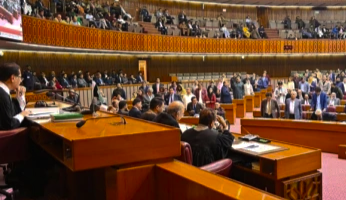
The National Commission for Minority Rights Bill 2025 was passed by the National Assembly and Senate in a joint session on Tuesday, despite intense debate. The landmark legislation aims to protect the rights of non-Muslims and establish a dedicated commission for minorities.

The bill is part of a decade-long effort to implement the Supreme Court’s 2014 directive for a special commission to safeguard minority rights. Law Minister Azam Nazir Tarar, who moved the bill, said, “The bill was delayed for 10 years and politics should not influence it”. He added that the passage of the bill marks a historic step towards formalising minority rights protections in Pakistan.

According to the bill, the commission will consist of 16 members. Each of the four provinces will nominate two minority members. One member will represent Islamabad, nominated at the discretion of the Chief Commissioner. Three members will come from existing bodies — the National Commission for Human Rights, the National Commission on the Status of Women, and the Child Rights Commission — nominated by their respective chairpersons. Officials from the Ministry of Law, Ministry of Religious Affairs, Ministry of Interior, and Ministry of Human Rights at Grade 21 will also serve on the commission. Members and the chairperson must be at least 35 years old, with the chairperson required to have experience in human rights.

The session saw heated exchanges over the longstanding issue of minority protections and the Qadiani community. Minister Tarar stressed that the bill aimed to implement the Supreme Court directive and assured lawmakers that no legislation would contravene the Quran and Sunnah.

Clause 35 of the bill, pertaining to the Qadiani community, was withdrawn. The JUI-F-led amendment to remove the clause, presented by Alia Kamran, was passed by majority vote. Minister Tarar assured lawmakers that the commission would uphold the Constitution and that no legislation would contravene the Quran and Sunnah.

Kamran Murtaza highlighted the potential conflict with previous protections for Qadianis, while Senator Noorul Haq Qadri and Qadir Patel emphasized that the bill should not be misused anu community.

Murtaza warned that Clause 35 could undermine existing safeguards for Qadianis. Tarrar responded that the Constitution recognises Qadianis as non-Muslims and agreed to remove the clause. Senator Noorul Haq Qadri clarified that PTI and JUI-F had no objections regarding Hindus, Sikhs, or Christians, but the Qadiani community remained a sensitive issue. Qadir Patel added, “No law should be enacted that could be misused, and accountability will be on the Day of Judgment.”

Opposition leaders, including Maulana Fazlur Rehman, criticised the 27th Constitutional Amendment, saying it failed to meet democratic requirements and had created social divisions. He recalled that even under Bhutto in 1973, negotiations were held before amendments were passed.

Fazlur Rehman expressed concerns about following Western models and said, “Today, we are following the path of the Jews and Christians,” calling for the Constitution to be corrected and mistakes to be reversed.

Raja Nasir Abbas highlighted Pakistan’s ongoing human rights challenges and questioned the hurried pace of legislation, while Fazlur Rehman warned that the debate risked reopening old controversies.

Imran Khan’s children worry about former PM’s well-being in custody

0

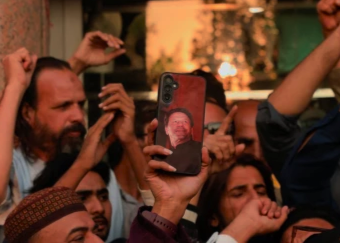
The sons of Pakistan’s jailed former prime minister Imran Khan have expressed deep concern that authorities may be hiding “something irreversible” about his condition after more than three weeks with no verifiable evidence that he is still alive.

Speaking to Reuters, Imran’s son Kasim Khan said the family has had no direct or verifiable contact with him, despite a court order mandating weekly prison visits. “Not knowing whether your father is safe, injured or even alive is a form of psychological torture,” he said. “Today, we have no verifiable information at all about his condition. Our greatest fear is that something irreversible is being hidden from us”.

The family has repeatedly sought access for Imran’s personal physician, who has been barred from examining him for over a year, Kasim added. Pakistan’s Interior Ministry did not respond to requests for comment. A jail official, speaking on condition of anonymity, said Imran was in good health and that he was unaware of any plans to move him to a higher-security facility.

Imran, 72, has been in prison since August 2023, convicted in multiple cases he claims were politically motivated following his removal from office in a 2022 parliamentary vote. His first conviction involved accusations of unlawfully selling gifts received in office. Subsequent verdicts added lengthy sentences, including 10 years for leaking a diplomatic cable and 14 years in a graft case related to the Al Qadir trust

charity project prosecutors say involved improper land deals.

Imran’s party, Pakistan Tehreek-e-Insaf (PTI), has maintained that the prosecutions are aimed at excluding him from public life and elections.

Kasim recalled the last time he saw his father in November 2022 after an assassination attempt. “That image has stayed with me ever since. Seeing our father in that state is something you don’t forget,” he said.

He further added, “We were told he would recover with time. Now, after weeks of total silence and no proof of life, that memory carries a different weight”.

The family is pursuing domestic and international avenues, including appeals to human rights organisations, and is demanding that court-ordered visits be restored immediately. “This is not just a political dispute,” Kasim said. “It is a human rights emergency. Pressure must come from every direction. We draw strength from him, but we need to know he is safe”.

Trial against Imaan Mazari ‘not transparent,’ counsel tells IHC

0

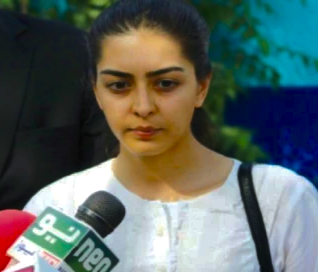
The court asked whether all the lawyers present were for this particular case, to which Ali Azad replied affirmatively, stating, “This is a very important case.”

Justice Azam Khan presided over the case with members of the Islamabad Bar Council, Raja Aleem Abbasi and Zafar Khokhar, also in attendance, along with Advocate Ali Azad representing the state. A large number of bar officials and lawyers were present.

The court directed defense counsel Advocate Ali Azad to first review the objections.

Advocate Ali Azad raised concerns that the trial was not proceeding transparently. He said that if there are multiple accused, the trial can continue if one has an exemption.

Ali Azad stressed, “A Fair trial is my constitutional right. Witness statements should be recorded in my presence. The trial court is not conducting a transparent trial. This is one of many cases pending before this court. These are bar members and professional lawyers”.

When the court asked about proceedings on November 24, Hadi Ali Chattha stated that they had filed a request for witness statements to be recorded in their presence, which was rejected.

Justice Azam Khan asked about the cross-examination of the five witnesses. Ali Azad said it had been conducted outside the courtroom, which violates the basic requirements of a fair trial.

Advocate Zafar Khokhar explained that the trial can continue under a permanent exemption, but not under a one-day exemption, as the pleader is assigned and must be present. Justice Azam Khan asked lawyers to cite the law supporting the one-day exemption limitation.

The lawyers requested the court to halt the trial court proceedings. Justice Azam Khan remarked, “We will review this and issue an order accordingly.”

The court adjourned the case for further hearing.

Mazari and her husband, Chattha, have previously raised objections after their state-appointed counsel withdrew from the controversial case.

The National Cyber Crime Investigation Agency has registered a case against Mazari and Chattha; both are accused of posting ‘anti-state’ sentiment on X. The couple was formally charged on October 30, a day after Chattha was arrested outside the courtroom for failing to appear. Mazari maintained that video footage showed him ‘inside and outside the courtroom’.

After his release, Chattha told reporters that he had arrived five minutes early for the October 29 proceedings, yet the judge had issued an arrest warrant ‘in front of him’.

Ahead of Tuesday’s hearing, Mazari also claimed that the court had ‘forcibly appointed a state counsel for her and Chattha.

ATC rejects Aleema’s plea to remove terror charges

0

The Rawalpindi anti-terrorism court has rejected Aleema Khan’s petition seeking the exclusion of terrorism charges under Section 7 of the Anti-Terrorism Act. Judge Amjad Ali Shah ruled: “Section 7 of the Anti-Terrorism Act (ATA) is valid, and the court also has proper jurisdiction”.

Earlier, police prevented Aleema from leaving the courtroom premises, citing the court’s order requiring her presence. “Preventing Aleema Khan from leaving amounts to an illegal detention, which we will challenge,” stated her defence lawyer, Faisal Malik. He added that if such behaviour continues towards Aleema Khan and her legal team, they may boycott the proceedings.

On November 13, 2023, Imran Khan made a “final call” for nationwide protests to be held on November 24, demanding the restoration of PTI’s electoral mandate, the release of imprisoned party members, and the reversal of the 26th Amendment, which he claimed had empowered a “dictatorial regime” and calling it “illegal”.

The case, registered at Sadiqabad Police Station against Aleema and 11 other accused, lists charges including protesting against the government, chanting anti-government slogans, vandalism, and stone-pelting. Aleema Khan had filed a petition in the ATC to have Section 7 of the ATA removed from her charge sheet, which was framed a month ago.

Section 7 of the ATA states that convictions for offences requiring more than 10 years imprisonment will also result in the forfeiture of property.

Faisal Malik noted that under Section 6 of the ATA, terrorism charges cannot be applied to political gatherings. He emphasised that this is an ordinary court case and cited relevant Supreme Court rulings.

The prosecution countered, describing the petition as a “waste of time,” noting that 12 of the accused have already confessed. They argued that challenges to terrorism charges should have been raised at the time of framing the indictment.

Questions were also raised regarding the status of the accused who have pleaded guilty and received sentences. The prosecution requested that witness statements be recorded.

The court rejected the petition, stating that “This case falls within the jurisdiction of the anti-terrorism court”. Aleema’s counsel has vowed to fight the charges in the Islamabad High Court.

The hearing has been adjourned until December 4, and the court has summoned government witnesses for the next date.

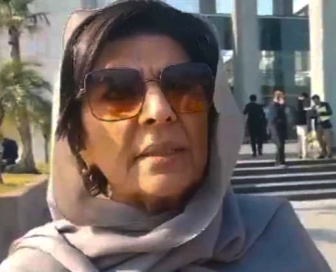
“They want to send me to jail; they are just looking for a way,” Aleema Khan said. “Judges’ time is being wasted unnecessarily,” she added.

The case hearings have been marred by controversy. Aleema Khan had been absent for many of the case hearings, which had led to the court issuing threats of property seizure and 11 arrest warrants. The ATC had also instructed to have her National Identity Card (NIC) and passport blocked. She had finally appeared in court for her hearing on November 20.

Aleema was briefly taken into judicial custody and barred from leaving the court premises in Rawalpindi in the previous hearing on November 26.

Pakistan, Egypt agree to bolster economic, defence ties, coordinate on Gaza peace efforts

0

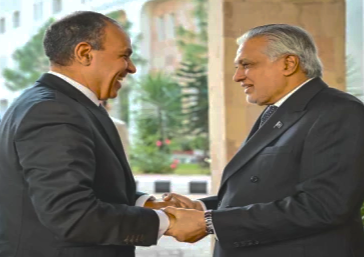
Dr Abdelatty, who visited Islamabad on November 29-30 at the invitation of Deputy Prime Minister and Foreign Minister Senator Ishaq Dar, held wide-ranging talks that officials described as “substantive, forward-looking, and strategically relevant” given the rapidly shifting Middle East environment.

During delegation-level discussions at the Ministry of Foreign Affairs, both sides reviewed the full spectrum of relations. including political, economic, defence, cultural, and educational. The highlight of the talks, however, was a renewed push to activate dormant institutional mechanisms and build a structured roadmap for economic and private-sector engagement.

A major deliverable of the visit was the decision to facilitate visa access for Pakistani businesses, starting with 250 business houses in the first phase and expanding to 500 in the second. In parallel, both sides agreed to establish the Pakistan-Egypt Business Council as well as the Pakistan-Egypt Business Forum, which will convene in the second quarter of 2026 alongside the bilateral Joint Ministerial Commission.

Officials said the goal is to institutionalise B2B linkages, increase investments, and tap the untapped trade potential between the two countries, particularly in textiles, agriculture, food products, and pharmaceuticals. Dr Abdelatty also announced that Al-Azhar University would double scholarships for Pakistani students, marking a significant boost in educational cooperation.

In a sign of deepening strategic engagement, the Egyptian foreign minister held a meeting with Chief of Army Staff Field Marshal Syed Asim Munir at the GHQ. Discussions focused on defence cooperation, training, military exchanges, and regional stability. Both sides reaffirmed that the armed forces of Pakistan and Egypt would maintain close high-level engagement.

Officials noted that the defence component of the visit was particularly important given Egypt’s increasing regional security role and Pakistan’s historic defence cooperation with Cairo. The timing of the visit carried added significance amid the ongoing Gaza peace plan efforts, where both Pakistan and Egypt have emerged as important diplomatic players.

Pakistan appreciated Egypt’s “pivotal humanitarian and diplomatic role” including its shuttle diplomacy, management of the Rafah crossing, and efforts toward ceasefire arrangements.

Pakistan and Egypt are part of the Arab-Islamic countries, which backed President Trump’s Gaza peace plan. Egypt will be acting as a focal player for the proposed International Stabalisation Force (ISF) for Gaza. Pakistan could potentially part of the force but it made clear that Islamabad would not join any effort to disarm Hamas.

Both foreign ministers reiterated their support for the establishment of an independent, sovereign Palestinian state based on pre-1967 borders with Al-Quds Al-Sharif as its capital.

Diplomatic sources said that with Egypt working on mediation formulae and Pakistan pushing for multilateral humanitarian mechanisms, the two countries are now aligning positions more closely than before.

Dr Abdelatty also met President Asif Ali Zardari, who praised the historic relationship between the two countries and expressed Pakistan’s desire to elevate ties across all domains. The president highlighted Egypt’s leadership amid regional uncertainty and stressed the need for continued coordination on humanitarian issues, particularly Gaza.

The Egyptian foreign minister also interacted with leading members of Pakistan’s business community, underlining investment opportunities and inviting Pakistani enterprises to explore Egypt’s expanding markets.

Officials in Islamabad said that the visit helped “reset momentum” in a relationship that had occasionally lagged despite shared history, mutual political goodwill, and converging regional interests.

With agreements on business facilitation, economic roadmaps, defence cooperation, and coordinated diplomatic positions on Gaza, the visit marked one of the most important outcome-driven engagements between the two countries in recent years.

Both sides reaffirmed their commitment to building a partnership oriented toward regional peace, economic resilience, and long-term cooperation.

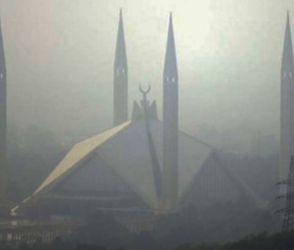
Smog blankets twin cities amid drought

0

A blanket of dust has settled over Murree’s once-vibrant landscape, covering green trees, flowers, buildings, and billboards, leaving them withered.

Recreational parks and tourist spots are also coated in dust due to the absence of rain.

Courtyards, rooftops, rooms and corridors of government offices are covered with layers of dirt. Vehicles parked overnight are found covered in dust the next morning. Birds also disappear into foliage and corners at sunset due to the dry cold, dust and smog.

Colourful flowers planted along roads and parks have wilted under the dusty winds.

Drilling work at the Kachehry underpass and overhead bridge projects is contributing further to air pollution. During travel, buildings, trees and mountains appear dust-covered.

Rising air pollution indices have dulled the beautification of both twin cities and Murree.

Increasing pollution has led to throat infections, eye irritation, cough, flu, ear and nasal pain, fever and other illnesses. The ongoing dry spell is also affecting wheat crops in the Potohar region.

Senate body wants CSS age cap raised to 35 years

0

The recommendation came during a meeting of the Sub-Committee of the Senate Standing Committee on the Cabinet Secretariat, held at the Parliament Lodges under the chairmanship of Senator Saleem Mandviwala.

Representatives of both the establishment and the FPSC participated in the meeting.

The session opened with a comprehensive briefing on the CSS competitive examination, covering the current marking scheme, screening mechanism, and assessment cycle.

major recommendation emerging from the meeting was the need to increase the number of examination attempts offered each year.
The committee argued that the current single annual attempt forces students to stretch their preparation across four years, often losing eligibility due to age constraints.

It was proposed that the FPSC allow two attempts per year, similar to supplementary examinations in other education systems, so that students do not lose years and can remain within the prescribed age brackets.

The FPSC, however, pointed out that under the current paper-based evaluation system, such a change is not immediately feasible due to the time required to assess the syllabus and finalise results.

Another key recommendation made during the meeting was to raise the general upper age limit for CSS candidates to 35 years, taking into account various factors that contribute to students’ gap years.

The committee was informed that the screening test (MCQ-based) comprises 200 marks and serves only as a qualifying stage. The written examination includes 600 marks for compulsory subjects, with a 40 per cent qualifying threshold, and another 600 marks for optional subjects, with a 33 per cent qualifying threshold. This brings the total written examination to 1,200 marks, for which candidates must secure an aggregate of 50 per cent (600 out of 1,200) to qualify.

Those who clear the written stage proceed to psychological assessment, medical examination, and finally the viva voce, carrying 300 marks, of which 100 marks (33 percent) are required to pass. Overall merit allocation is based on a total of 1,500 marks.