Thursday, January 29, 2026
Home Blog Page 26

Pakistan pitches alternative as SAARC remains in gridlock

0

ISLAMABAD:

Deputy Prime Minister and Foreign Minister Ishaq Dar on Wednesday made a pitch for a new regional body to replace the long-dormant South Asian Association for Regional Cooperation (SAARC).

Speaking at the opening session of the 5th Islamabad Conclave hosted by the Institute of Strategic Studies Islamabad (ISSI), Dar warned that South Asia could no longer afford to remain trapped in “zero-sum mindsets, political fragmentation and dysfunctional regional architecture”.

He said Pakistan sought “open and inclusive regionalism” and signalled support for emerging multilateral platforms outside SAARC.

Dar said earlier this year Pakistan, Bangladesh and China established a trilateral mechanism to foster mutual collaboration in areas of common interests.

“This concept can be expanded and replicated. As I have said before, groups with variable geometry – on issues from the economy to regional priorities – cannot and should not be held hostage to anyone’s rigidity,” Dar said, in a veiled reference to India.

The recent trilateral meeting of Pakistan, China and Bangladesh in Kunming, the first of its kind, was a key step in the ongoing consultations.

Senior diplomats from the three countries explored the contours of a new grouping, with an eye to eventually inviting other South Asian states, including Sri Lanka, the Maldives and Afghanistan.

India would also be invited to join the proposed forum, sources said, but New Delhi is unlikely to participate given its growing strategic divergence with both Pakistan and China.

SAARC, once envisioned as the “EU of South Asia”, has effectively been defunct since 2016, when India boycotted the summit Islamabad was scheduled to host. Bangladesh, under Sheikh Hasina at the time, also followed suit.

Since then, no summit has been held, and recent actions including India’s withdrawal of SAARC visa exemptions for Pakistani businessmen have further weakened the organisation.

Officials familiar with the backchannel discussions said Pakistan and China concluded that the region could no longer wait for SAARC to revive, and that “like-minded countries must move ahead.”

Observers note that India’s unease with broader regional groupings has increased in recent years.

India also faced an embarrassing moment last week when nine SCO members declined to back its position on Pakistan. New Delhi refused to sign the final communiqué because it did not include language aligned with its narrative on the Pahalgam attack.

In his address, the foreign minister urged South Asian states to break away from “the burden of history” and pursue cooperation in security, economy, climate adaptation and connectivity. He cited the recent India-Pakistan 92-hour crisis as proof of how fragile the region remains.

Dar said Pakistan envisions a South Asia where “connectivity replaces divisions” and disputes are resolved peacefully, while adding that a just solution to the Jammu and Kashmir issue remains “indispensable” for sustainable peace.

He also welcomed new formats of cooperation, including the Pakistan–China–Bangladesh trilateral mechanism, which he said could be expanded into broader coalitions with “variable geometry” on trade, technology and infrastructure.

PM announces live broadcast of PIA bidding process on December 23

0

ISLAMABAD:

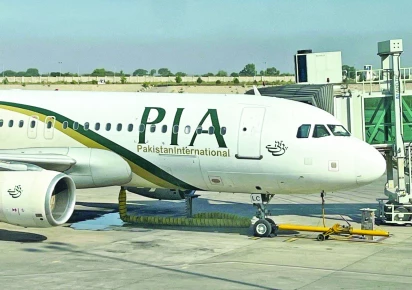
Prime Minister Shehbaz Sharif on Wednesday announced that the bidding process for the privatisation of Pakistan International Airlines (PIA) would be broadcast live on national television, emphasizing that full transparency and merit would remain the government’s foremost priorities.

“The entire bidding on December 23, 2025, will be aired live on all media channels so that the nation can witness the process firsthand,” he added.

Speaking during a meeting at the Prime Minister’s House with all business leaders and company representatives participating in the PIA privatisation, the PM said the airline’s lost reputation must be restored through a smooth and credible transition.

He said the government was committed to aligning the national flag carrier with modern aviation standards, adding that the reform and divestment process was progressing in an efficient and structured manner.

“InshaAllah, PIA will once again live up to its old slogan of ‘Great People to Fly With’,” the PM remarked.

Reiterating his government’s commitment to a corruption-free and professionally executed process, he said transparency would be maintained at every step..

Prime Minister Shehbaz Sharif said restoring PIA’s global routes would greatly benefit overseas Pakistanis by providing reliable connectivity.

Modernising the airline, he added, was also critical for strengthening Pakistan’s tourism sector, which required a competitive and efficient national carrier.

The prime minister said he was hopeful that whichever bidder ultimately takes charge would dedicate its full energies to restoring the airline’s identity and securing its long-term growth.

The participants praised the government for adopting a transparent and professional mechanism for the privatisation exercise.

The meeting was attended by all bidders participating in the PIA privatisation round, along with senior members of the federal cabinet and government advisors. Federal ministers Ishaq Dar, Ahsan Iqbal Cheema, Muhammad Aurangzeb, Attaullah Tarar, Azam Nazeer Tarar, and Sardar Owais Leghari; Minister of State Bilal Azhar Kayani; Adviser to the PM Muhammad Ali; Special Assistant Haroon Akhtar; and senior officials were present.

Tariff Policy

Prime Minister Shehbaz Sharif on Wednesday said that the incumbent government was taking priority measures to reduce the production cost of industrial goods for local industry, trade, and population.

The prime minister, chairing a meeting to review recommendations of the sub-working group on customs duty and other trade sector reforms, said that the National Tariff Policy approved by the government was a revolutionary step to boost domestic industrial production while making businesses competitive in local and international markets.

He said that the Policy was also introduced to align the country’s exports and imports with overall national economic growth.

He said that identifying the sector-specific proposals and issues was inevitable to increase domestic industrial production and trade.

The prime minister said that for decades, the Export Development Fund was not utilised to promote research and training to enhance economic and industrial production capacity.

He emphasised that the recommendations and reform proposals in the export and import sectors put forward by experts must be based on realistic data and statistics.

Prime Minister Shehbaz also directed strict monitoring of customs duties collection on bilateral and transit trade goods with other countries on the border.

The working group viewed that sustainable export-led economic growth was only possible through increased investment and production capacity, government protection, and improved infrastructure.

During the meeting, Muhammad Ali Tabba and other representatives of the business community, who are part of the sub-working group, briefed the prime minister on issues related to customs and tax collection and presented their recommendations.

Prime Minister Shehbaz welcomed the recommendations and issued instructions to the ministries and institutions concerned to extend all possible facilities to the business community and investors.

The meeting was attended by federal ministers Muhammad Aurangzeb, Attaullah Tarar, Musadik Malik, Awais Ahmad Khan Leghari, Ahad Khan Cheema, Ali Pervaiz Malik, Azhar Bilal Kayani, Haroon Akhtar, National Coordinator of Special Investment Facilitation Council (SIFC), representatives of national industry and business community and senior government officials.

Analysis finds clear improvement in Lahore’s November air quality

0

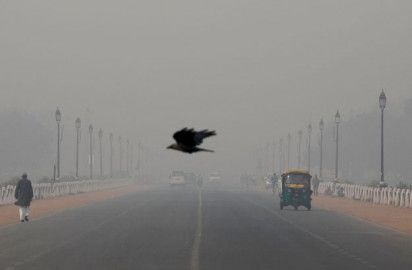
An analysis by the Air Initiative, an environmental monitoring organisation, shows that Lahore’s air quality in November this year recorded a significant improvement compared to the same month last year.

According to the latest data, not a single day in November reached the extremely hazardous pollution level of 300 or above, a stark contrast to last November when the pollution index remained beyond this threshold for several consecutive days.

“The daily average pollution level in November 2025 stood at 237 micrograms per cubic meter. This marks a 56 per cent decline compared to last year’s highest level of 539 micrograms per cubic meter,” said Maryam Shah, Head of Communications at the Pakistan Air Quality Initiative. She added that a notable reduction was also seen in the monthly average, which dropped by 37 per cent to 181 micrograms per cubic meter. Furthermore, on an annual basis, the overall air pollution level has reportedly fallen by approximately 15 per cent.

She noted that the severe pollution factors observed last year, which had enveloped the city in prolonged smoke and smog, did not appear this time. According to her, the absence of these intense triggers played a key role in preventing pollution from escalating to extreme levels.

Experts, meanwhile, emphasise that weather conditions also contributed to the improvement. They highlight that stronger winds and better atmospheric mixing helped reduce the rate at which pollutants accumulated in the air. However, they caution that despite the disappearance of days with extremely high pollution, the fundamental baseline level of pollution in the city remains troubling.

She further explained that all 30 days of November were classified as unsafe when measured against Punjab’s environmental standards, where the health-acceptable limit is set at 35 micrograms per cubic meter. She stressed that although the downward trend in pollution is encouraging, it cannot yet be considered a permanent shift.

In this regard, experts say that data from the coming years will be crucial in determining whether this improvement represents a sustainable pattern. If the positive trajectory continues, it will reflect the effectiveness of government measures. If not, they argue, there will be a need to re-evaluate the true influence of weather patterns and other contributing factors.

Despite the encouraging figures, both analysts and environmental specialists agree that Lahore’s air quality, while improved, remains far from safe, underscoring the need for continued vigilance and long-term, sustained interventions.

Punjab replaces traditional brooms with EVs, mechanical sweepers

0

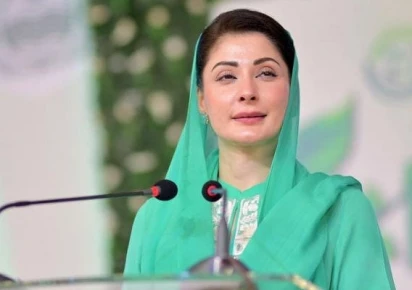
Punjab is undergoing a major revolution in urban and rural sanitation, as Chief Minister Maryam Nawaz Sharif unveils a comprehensive plan to modernise cleanliness across the province. For the first time, traditional brooms are being replaced with eco-friendly electric vehicles and mechanical sweepers under the Clean Punjab initiative.

Energy will now also be generated from waste through the “Waste-to-Value” project, for which the chief minister has requested a comprehensive plan by mid-January. Cleaning services will now be provided in every street and alley, including Sundays, marking an unprecedented effort to maintain hygiene across cities and villages.

Under the new system, anyone littering in commercial areas or on roads will face legal action, with violators being brought under the law within 15 days. The number of sanitation workers in every union council will be increased, and proposals are being reviewed to provide one tractor for every two union councils. Proper waste enclosures will also be constructed for garbage bins and containers, establishing new standards for organisation and cleanliness.

CM Maryam emphasised the scale and impact of the project, calling it “nothing less than a miracle” and noting that a comprehensive cleaning system should have been established years ago. She added that the project started from zero and is improving over time, receiving positive feedback from citizens across the province.

For greater transparency, salaries and payments have been digitalised, while a Vehicle Tracking Management System and live container monitoring are being used to oversee sanitation vehicles. Waste management companies are being assessed based on KPIs, with performance determined through marks, ensuring accountability and efficiency.

With this initiative, Punjab is setting a new benchmark in public sanitation, combining modern technology, strict enforcement, and citizen-friendly policies to create a cleaner and greener province.

Protest staged against Nipa Chowrangi tragedy

0

KARACHI:

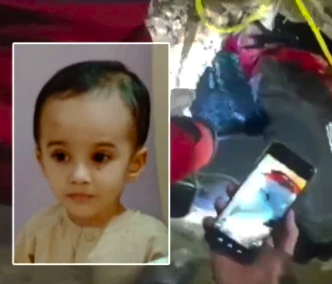
A protest was staged at Nipa Chowrangi on Tuesday against the tragic death of a three-year-old boy, Ibrahim, who fell into a manhole on Monday, triggering widespread criticism over the mismanagement by the Karachi Metropolitan Corporation the mayor and the Karachi Water and Sewerage Corporation.

The demonstration, led by Jamaat-e-Islami (JI) Karachi’s Deputy Ameer and KMC Opposition Leader Saifuddin Advocate, condemned government indifference and the alleged incompetence of Karachi Metropolitan Corporation (KMC) and the KWSC.

Addressing the gathering, Saifuddin Advocate said the responsibility for providing manhole covers lies with KMC and the Water Corporation. He demanded that Mayor Murtaza Wahab resign, holding him accountable for the incident. Protesters carried banners and placards with slogans such as “Resign Mayor Murtaza Wahab,” “Don’t turn the city into a graveyard,” and “Put covers on manholes or go home.” One banner displayed Ibrahim’s picture with the words: “Whose hands should I seek my blood from?”

Speakers accused the mayor of shifting blame onto town chairmen instead of accepting responsibility. Saifuddin alleged that only 25 covers were provided to a union council, whereas thousands are needed, and insisted that it is not the responsibility of town or UC chairmen to arrange covers from their own budgets.

Punjab issues strict kite-flying ordinance to curb deaths

0

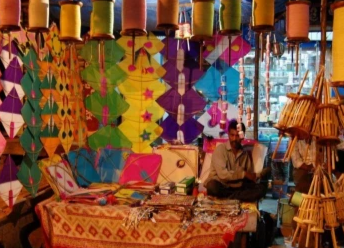
The Punjab government issued the Punjab Regulation of Kite Flying Ordinance 2025, bringing the new law into immediate effect across the province to regulate kite flying, restrict the manufacturing and sale of dangerous kite material, and prevent loss of life and property.

The ordinance was issued on December 1 by the Law and Parliamentary Affairs Department after the Governor determined there was an urgent need for legal intervention while the Provincial Assembly was not in session.

The fresh ordinance comes amid a rise in deaths and injuries linked to sharp kite string, particularly metallic wire and chemically coated maanjha used during seasonal kite flying. Authorities say the new rules aim to curb the use of hazardous materials and impose strict penalties on violators ahead of the winter and spring months, when kite-related incidents typically surge.

Under the ordinance, flying a kite, assisting kite flying, or producing, storing, transporting or selling any kite or dangerous string is prohibited unless permitted under regulated conditions.

Offenders face harsh punishments: three to five years in prison and fines up to Rs2 million for flying or abetting kite flying, and five to seven years imprisonment plus fines up to Rs5 million for manufacturing or trading banned string or kites.

Children found violating the law will be dealt with under the Juvenile Justice System Act 2018, with fines of Rs50,000 for the first offence and Rs100,000 for repeat violations; unpaid fines will be recovered from parents or guardians.

Another key provision makes all offences non-bailable and cognizable, allowing police to arrest violators without a warrant. Manufacturers and traders will now be required to register with the Deputy Commissioner to legally produce or sell permissible kite-flying materials.

Anyone operating without registration may face up to five years imprisonment and fines up to Rs500,000. The government has also introduced whistle-blower protections, though no reward will be granted for information already known or deemed unhelpful to authorities.

The ordinance overrides all other conflicting laws and formally repeals the Punjab Prohibition of Kite Flying Ordinance 2001, while keeping previous actions taken under the old law intact. It authorises the provincial government and the Home Department’s Secretary to issue rules, regulations and guidelines for implementation through notifications in the official Gazette.

Approved by Governor Sardar Saleem Haider Khan and issued by Law Secretary Muhammad Asif Balal Lodhi, the ordinance establishes a stricter regulatory framework that allows permissible kite flying only under controlled settings, while aiming to reduce injuries, improve oversight, and strengthen accountability across Punjab.

Gunmen open fire on police in South Waziristan, officer injured

0

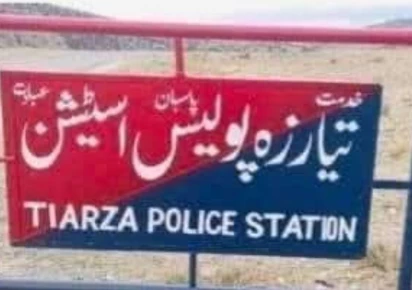
Unidentified militants ambushed a police party from Tiarza Tehsil at Torwam Market and opened fire at 10.30am on Wednesday. The police party was led by Station House Officer Qadar Khan, accompanied by three police officers and one Special Branch officer, Imam Hussain.

During the exchange of fire, Special Branch officer Hussain sustained minor injuries to his hand. The injured officer was immediately taken to a nearby medical center. SHO Qadar Khan and the other officers remained unharmed.

The attackers fled into the mountains. The police have cordoned off the area and launched a search and clearance operation, but have not been able to identify or arrest any of the militants. Police officials believe that two to four assailants were involved in the attack.

Tiarza Tehsil is the last tehsil of South Waziristan in Khyber-Pakhtunkhwa, and the closest to North Waziristan, with the tehsil boundary near Wana in North Waziristan, a bit far from the Pak-Afghan border. Attacks on police and armed forces are a common occurrence in the area.

Auto industry buckles under rising used-car imports

0

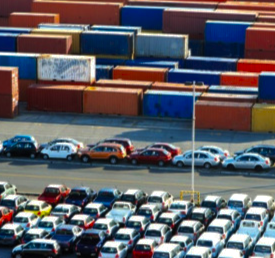
Pakistan’s domestic automobile industry is facing intense pressure, weighed down by heavy taxation, uneven import policies, and an unchecked influx of used vehicles. The situation is particularly alarming given that the sector contributes around two per cent to the country’s GDP and brings in more than $600 million annually in foreign exchange through skilled Pakistani technicians working overseas. In the 2025 financial year alone, the industry paid over Rs700 billion in taxes — underlining its economic importance.

Stalled robotic assembly lines, slowing production, and a shrinking workforce illustrate the depth of the crisis.

Officials from the Ministry of Industries and Production say regulations are being tightened to curb the misuse of used-car imports and that standards are being aligned with international benchmarks. They added that the new auto policy has been finalised and will soon be presented to the prime minister. The IMF is also being taken on board regarding taxation and tariff matters, after which the policy will be issued. According to the ministry, the new framework addresses concerns raised by auto manufacturers, parts makers, and other stakeholders.

Manufacturers argue that if the government rationalises taxation and regulates used-car imports, production could stabilise and the livelihoods of hundreds of thousands of families could be protected. Pakistan has become the only auto-producing country in Asia where imported used cars hold a significant share of the market, accounting for nearly 25% of all sales between December 2024 and December 2025. Fresh data compiled from December 2024 to October 2025 shows that used-car imports are once again rising sharply.

By comparison, used cars represent almost zero per cent of sales in India, 0.3% in Vietnam, and 1.2% in Thailand — a contrast that experts say highlights Pakistan’s policy inconsistencies. Other regional economies have restricted such imports to protect their auto value chains, whereas Pakistan has moved in the opposite direction.

This divergence widened after the Ministry of Commerce’s September 30, 2025, notification (No. 1895), which allowed the import of vehicles up to five years old. Reports suggest that after June 2026, even this limit may be removed, paving the way for a much larger inflow.

Pakistan’s auto sector currently comprises around 1,200 factories, employing more than 2.5 million people. It contributes approximately Rs500 billion annually to government revenue and has attracted around $5 billion in foreign investment.

Pakistan Association of Automotive Parts and Accessories Manufacturers (PAAPAM) senior vice-chairperson Shehryar Qadir warned that import-friendly policies could erode the industry’s hard-won gains at a time when industrial revival and localisation have been declared government priorities.

Of the 45,758 used vehicles imported into Pakistan between December 2024 and December 2025, nearly 99% came from Japan — a right-hand drive market compatible with local road conditions. Imports from other countries remained negligible: 130 units from Thailand, 55 from the US, 49 from Jamaica, 47 from Germany, 22 from Australia, 20 from China, and just five from the UAE.

Former PAAPAM chairperson Abdul Rehman Aziz says, “There is a lack of coordination between the State Bank, FBR, and provincial excise departments, leading to cases in which vehicles are imported under one person’s name but registered under another’s.

“99% of used cars go straight from ports to showrooms because importers are not required to use them for any period, defeating the original intent of facilitating overseas Pakistanis,” he added.

Industry estimates show that the local vendor sector has suffered losses of around Rs50 billion during this period. The impact on foreign exchange is also clear: local manufacturers use documented banking channels for imports worth about $10,138 per vehicle, while used-car importers spend around $14,010 per vehicle, much of it through informal means.

Although the government is drafting a new auto policy aimed at stabilising domestic production, stakeholders remain divided on whether localisation is feasible under a liberal import regime.

Data indicates that Pakistan stands apart — and in some respects against — global auto-manufacturing trends, both in policy and market outcomes. Experts say the key question for policymakers is not whether imports should be allowed, but what their volume should be, and whether the current trajectory aligns with national industrial, employment, and fiscal objectives.

Car importer and dealer Naveed Muddasir told The Express Tribune that, “If the misuse of five-year-old used-car imports is checked, the local industry could be given a strong chance of recovery.

Former PAAPAM chairperson Nabeel Hashmi has said, “Rationalising taxes and improving the import regime could not only restore the sector’s lost position but also help Pakistan develop the capability to export vehicles in the future — unlocking billions of dollars in investment and job creation”.

Despite internal challenges, the auto industry contributed more than Rs700 billion to the national exchequer last year, accounting for six per cent of total tax revenue, while employing more than 2.5 million people nationwide. But falling production, policy uncertainty, and growing investor anxiety are deepening the sector’s fragility.

Experts argue that only a clear, robust, and long-term auto policy can stabilise this industry — one that protects local manufacturers and positions Pakistan to eventually introduce its vehicles to global markets, potentially earning billions in foreign exchange.

They say the auto sector remains a vital pillar of the economy and urgently awaits steady policy direction. Timely action, they warn, could revive the industry and help put the wider economy back on track.

According to the Ministry of Industries and Production, new standards are being set to curb the misuse of used-car imports. A mandatory holding period is also being introduced, under which importers will be barred from selling a vehicle before the government-specified timeframe; early sales will incur duties and taxes at standard rates.

Officials say the new policy has been drafted with full stakeholder consultation, with committee-level input from across the auto sector. The ministry maintains that the upcoming policy will promote the auto industry and address its longstanding concerns.

KMC holds BRT, departmental store responsible for toddler’s death in open manhole

0

The Karachi Metropolitan Corporation (KMC) has held Red Line BRT authorities and the management of a private departmental store, Chase Up, responsible for the death of three-year-old Ibrahim, who fell into an open manhole near Nipa Chowrangi in Gulshan-e-Iqbal on Sunday night. The child’s body was recovered after a 14-hour search near Sir Syed University of Engineering and Technology.

According to the KMC report, submitted to the Secretary of the Local Government Department, the tragedy occurred because excavation work for the Red Line BRT project had severely damaged the drainage system. Temporary two-foot covers placed over the drains were inadequate to prevent accidents.

The Express Tribune has recovered CCTV footage of the incident. It shows the manhole was inside the bike-parking area, not clearly seen, but with no construction work visible. Excavation only began after the incident to recover the child.

The report emphasised that the BRT authorities had not informed KMC before starting the work, and that such unsafe practices—using substandard temporary covers and leaving manholes open—had never been employed by the municipal corporation. KMC said negligence on the part of BRT was a key factor in the child’s death.

However, this was not the first time a child had died after falling into an open manhole in Karachi. In January 2025, eight-year-old Ibad Asad fell into an uncovered manhole near a wedding hall in Shah Faisal Colony and died despite rescue efforts. Last year alone, at least 19 people lost their lives due to open sewers, highlighting a persistent issue of oversight and the failure of local authorities to ensure basic public safety measures. Similarly, in September 2021, two-and-a-half-year-old Hamza died in Garden West after the manhole cover near his grandfather’s house had been missing for 15 days, with residents reporting that nearby construction activity had damaged it.

Ibrahim, the only child of Nabeel and his family, slipped into the open manhole around 11pm on Sunday while walking ahead of his father between parked motorcycles outside the store. His body traveled nearly half a kilometre through three internal sewage channels before being recovered. His mother reportedly fainted, and his grandfather, Mehmoodul Hasan, received the body.

Locals and volunteers joined the search but faced delays due to a lack of machinery and sewerage maps. Ibrahim’s father and grandfather even spent Rs15,000 on private excavation before KMC teams resumed operations. BRT machinery arrived nearly 16 hours after the fall to excavate the main drainage line.

Political leaders, including MQM’s Dr Farooq Sattar and Jamaat-e-Islami’s Hafiz Naeemur-Rehman, criticised authorities and highlighted the safety risks posed by uncovered drains and manholes. Mayor Murtaza Wahab expressed condolences and said relevant authorities, including the Karachi Water & Sewerage Board (KWSC), had been instructed to investigate.

Following the incident, an investigation committee formed on the instructions of the Sindh Chief Minister visited the site, accompanied by Assistant Commissioner Gulshan-e-Iqbal Syed Amir and local police. The committee inspected the store and the location where Ibrahim’s body was recovered. It will determine the causes of the accident and submit its findings to the Chief Minister.

The incident also sparked protests at Nipa Chowrangi, where residents blocked roads, burned tyres, and halted traffic. Some protesters damaged media vans, prompting police to divert vehicles to nearby routes. Lawyers, journalists, and residents expressed distress on social media platforms, including X, urging authorities to take urgent measures to prevent similar tragedies.

Senior Sindh Minister Sharjeel Inam Memon expressed sorrow, assured strict action, and noted that 88,000 manholes have been covered this year. The tragedy also triggered legal action as two petitions were filed in District East seeking a criminal case against Mayor Murtaza Wahab and other municipal officials, citing repeated complaints by Ibrahim’s family and delays that forced them to hire a private search team.

Two young Islamabad women crushed by speeding SUV

0

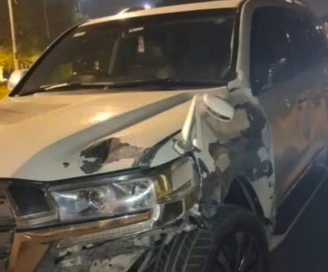
A 16-year-old boy, driving a white SUV, struck and killed two young women riding a scooter on Secretariat Chowk opposite the metro station in Islamabad on Monday night. According to the remand report, he struck the girls as he was recording a video for Snapchat.

The two victims, Samreen, aged 25, and Tabbinda, 27, worked part-time with an events management group at the Pakistan National Council of the Arts. Their scooter was destroyed on impact.

The suspect has been identified as Muhammad Abuzar Reki, son of Muhammad Asif, who is believed to hold an important position in the Islamabad High Court. The Express Tribune has retrieved a copy of the First Information Report, the remand report, and the accused’s ID card.

According to the remand report, he was driving at high speed when he hit the scooter, causing both women to fall with severe injuries. They later died from their wounds. After appearing in the Islamabad District Court on Tuesday, Judicial Magistrate Shaista Kundi approved a four-day physical remand of the accused and handed him over to the police. According to the remand report, the address given is one on Spinny Road, Quetta, Balochistan.

Abuzar told investigators he was making a video on Snapchat moments before the collision. He admitted to throwing his mobile phone away immediately after the accident, police said. Authorities are now working to recover the device to examine the video he was recording at the time of the crash.

The case has been complicated by questions about the suspect’s age and legal status. Abuzar does not possess a driver’s license, though his National Identity Card has been procured by the police detailing his age as 16. Police are reviewing CCTV footage from the accident site.

Investigators are also working to determine whether Abu Zar was alone at the time of the incident or had passengers in the vehicle.