Thursday, January 29, 2026
Home Blog Page 25

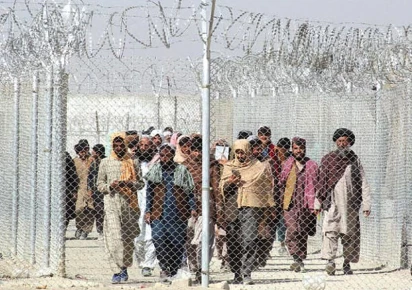
Hundreds stuck at Chaman as border remains closed after firing

0

Pakistan–Afghanistan border at Chaman remained closed on Saturday following a night of cross-border firing, leaving hundreds of travellers, traders and families stranded on both sides amid heightened security deployments

The Frontier Corps and other security units in Pakistan reinforced key crossing points after the exchange of fire with Afghan forces late Friday night. Afghan authorities also strengthened positions across the border in Spin Boldak, raising concerns among residents about a possible prolonged standoff.

Dozens of Afghan nationals waiting to return home were stuck at the Friendship Gate for hours, with some stranded for days due to the sudden closure. Many expressed concern over dropping temperatures and limited facilities.

“We were preparing to cross early in the morning, but the gate never opened. Families with children are suffering the most,” said a traveller at the terminal.

A detailed report on the security situation will be forwarded to the Chairman of the Border Management and Master Plan Committee, local sources said.

At least three civilians, including a woman, were injured during Friday night’s clashes that lasted several hours. Medical teams in Chaman have been treating the wounded and monitoring the situation closely.

On the night after the explosions in Kabul, Afghan Taliban forces, allegedly supported by elements of the TTP, launched attacks along multiple border sectors, including Chaman, Angoor Adda, Bajaur, Kurram, Dir, Chitral and Baramcha.

Earlier this year, clashes were reported along the border during a brief period of tension with Afghanistan. On October 8, tensions escalated after explosions in Kabul, reportedly linked to Pakistani airstrikes targeting TTP leaders.

At least 23 Pakistani soldiers were killed in the clashes, with Pakistan claiming over 200 Afghan fighters also died. The firing damaged the Pak-Afghan Friendship Gate, a key civilian crossing point. In response, Pakistan closed its border crossings, and on October 16 both sides agreed to a 48-hour ceasefire.

K-P government to withdraw 55 cases filed during May 9 protests against PTI workers

0

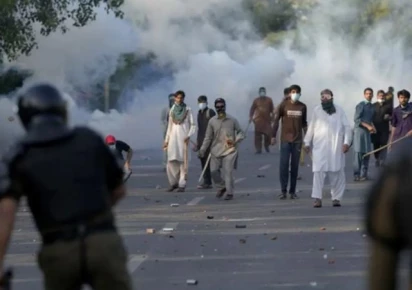
Khyber Pakhtunkhwa government plans to withdraw more than 55 cases filed against PTI workers during protests on May 9 and 10 after a cabinet decision.

Advocate General Shah Faisal Utmankhel said 319 cases were registered during the protests. Most of the accused have been acquitted or discharged due to insufficient evidence. The 55 pending cases will be withdrawn once cabinet meeting minutes are received, and Additional Advocate General Inam Yousafzai has been appointed as special prosecutor to oversee the process.

Some cases did not include anti-terrorism clauses, while others were decided after responses were submitted to court. The 55 cases with no responses filed are the ones that will be withdrawn. Of those with Anti-Terrorism Act (ATA) provisions, 29 remain pending, while 23 have concluded with eight acquittals. The remaining cases were transferred to regular courts because ATA provisions could not be applied.

Six cases remain pending, with responses submitted for one and the remaining five still in process. Once cabinet minutes are received, withdrawal applications will be filed and argued in court, leaving no pending cases from the protests.

According to a report on Saturday, 416 terrorism cases are pending across 10 Anti-Terrorism Courts (ATCs) in Khyber Pakhtunkhwa. Peshawar accounts for 192 of these cases across three courts.

In November 2025, 100 cases were decided across the province. Peshawar resolved 57, Matta 15, and Mardan seven, while Swat and Upper Dir each decided three. Meanwhile, courts in Buner, Bannu and Dera Ismail Khan decided none.

King Verstappen chases fifth title

0

ABU DHABI:

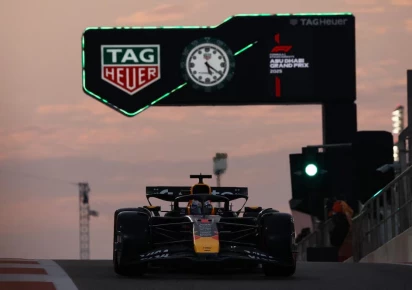
Max Verstappen has won the Formula One title for the last four years but it would be far from ‘more of the same’ if he snatches a record-equalling fifth in a row at the Abu Dhabi season finale on Sunday.

The 28-year-old Red Bull driver has come back from 104 points behind McLaren’s then-championship leader Oscar Piastri to 12 adrift of the Australian’s teammate Lando Norris, now the frontrunner, in a span of just eight races.

As far as comebacks go, it is the greatest of the modern era in terms of reclaiming lost ground.

It could also be one for the ages, eclipsed only by some of the most heroic underdog stories, like Niki Lauda’s return from a fiery crash to take the title down to the wire in 1976 before winning it in 1977.

“I think whether or not Max will win, it’s probably fair to say that the world discovered an even more extraordinary Max this season, after his fourth world title,” Verstappen’s Red Bull team boss Laurent Mekies told reporters at the Yas Marina circuit on Friday.

“It’s up to you guys to say if… (2025) will become the best of his titles.

“But for sure, in terms of whatever happens next, the scale of the comeback is something that hopefully will go in a few history books.”

Stand equal with Schumacher

Regardless of where it ranks, the Dutchman’s quest to become only the second driver after Ferrari great Michael Schumacher to win five titles in a row stands in stark contrast to his four other title-winning campaigns.

Then, he was more hunted than hunter, if not dominant. Even in his hard-fought battle with Lewis Hamilton in 2021, Verstappen was chased down by the Briton who drew level with him on points heading into the Abu Dhabi finale.

This year, however, he has had to fight off the back foot — overcoming an initially uncompetitive car and navigating a Red Bull leadership reshuffle that had Christian Horner ousted as team boss.

At the same time, he has balanced his F1 responsibilities with his role as father to a baby daughter, born in May, and extracurricular pursuits like GT racing, even winning on his GT3 debut around German track Nuerburgring’s fearsome Nordschleife loop.

Five of Verstappen’s seven wins have come in the last eight races, all of which he has finished on the podium.

Misfortune for his McLaren rivals has also worked in his favour. But equally, every bit of his trademark tenacity and determination has been on display, as he has hunted down the McLaren pair.

Born in Belgium to an F1 racer father Jos and top-level go-karter mother Sophie Kumpen, Verstappen has been on wheels as soon as he could walk.

His speed has never been in question. But this year it has been mated to a newfound maturity and a calm confidence, making him an even more formidable competitor.

“Max is not an easy four-time world champion to knock off his perch,” said McLaren chief executive Zak Brown on Friday.

“Arguably, definitely, one of the greatest ever. It’s awesome racing against Max,” added the American.

Verstappen still needs Norris to finish off the podium on Sunday to seal the title, even if he races to a fifth Abu Dhabi win.

But if anyone can spring an upset, Verstappen can.

“Look, this guy never gets it wrong, you know, Max just never does a mistake,” said Mekies.

“He keeps surprising us every day.”

Scaloni vows to repeat winning formula

0

BUENOS AIRES:

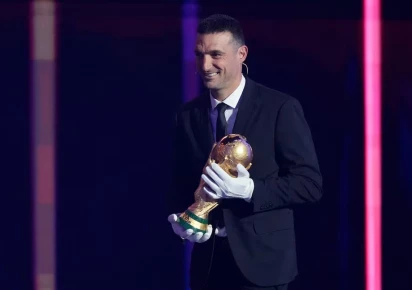
Argentina coach Lionel Scaloni said the world champions will stick to the same winning formula that delivered glory at the Qatar 2022 World Cup after on Friday finding out their group opponents for next year’s global tournament.

The Albiceleste were drawn with Algeria, Austria and Jordan in a Group J that fans in Buenos Aires described as favourable – though Scaloni warned that there would be no easy games.

“We are going to give the maximum and try to do what we did in the last World Cup, which is to give everything we can, not to give a ball up for lost,” said Scaloni, who entered the draw ceremony clutching the trophy as coach of the holders.

Argentina face a potentially tricky path to the final with a last-32 clash awaiting against a team in Group H – headlined by powerhouses Spain and Uruguay, plus Saudi Arabia and Cape Verde.

“As in 2022, we say that there is no easy opponent. You have to play the games. If it is then that the group (H), the crossover is difficult. But first we have to get through and then we’ll see,” Scaloni said.

The coach said Algeria were “a good team with great players” and praised their coach Vladimir Petkovic, his former head coach at Italian club Lazio.

He also praised Austria for their “great qualifying round,” with the Austrians having finished top of their group, while debutants Jordan remained the unknown quantity – though Scaloni insisted Argentina would “not take anything for granted.”

The memory of Argentina’s shock opening 2-1 defeat by Saudi Arabia in Qatar clearly lingers. “We have that experience, we have to play the match,” Scaloni said when discussing Jordan.

Back home, fans seemed pleased with their team’s draw.

“It seems to me that it is favourable, isn’t it?” Patricio Neira, a 45-year-old teacher, told Reuters TV.

“None of the big powers, no ‘bogeyman’ … there is no European team that’s one of the strong ones. I think it’s a good thing, especially for the first few games.”

Argentina beat France 4-2 in a penalty shootout after a thrilling 3-3 draw to win the 2022 World Cup.

Draw for FIFA World Cup kind to favourites

0

WASHINGTON:

Friday’s FIFA World Cup draw at the Kennedy Center in Washington, DC put top teams Argentina, Spain and England in seemingly favourable groups for the 2026 competition which will take place in the United States, Canada and Mexico.

However, France will face tougher matches against Senegal and Norway.

Holders Argentina and leading contenders Spain and England were all handed kind draws for the 2026 World Cup in a star-studded ceremony on Friday which saw US President Donald Trump receive FIFA’s new peace prize.

The event in Washington started the final countdown to the tournament, six months out from the first-ever 48-team World Cup, with much-fancied France among those receiving a harder task.

Lionel Messi’s Argentina will begin their defense of the trophy they won in Qatar in 2022 against Algeria, and will also face Austria and debutants Jordan in Group J.

Heavily-fancied Spain, the European champions, will kick off against first-time qualfiers Cape Verde before also taking on Uruguay and Saudi Arabia in Group H.

Thomas Tuchel’s England will meet Croatia, Ghana and Panama in a kind-looking Group L.

Two-time winners France, meanwhile, face awkward tests against Senegal and Erling Haaland’s Norway in Group I, which will be completed by an intercontinental play-off winner from either Iraq, Bolivia or Suriname.

The 2026 tournament will be held across the United States, Mexico and Canada from June 11 to July 19, with 16 more teams added to the global showpiece, up from the 32 nations involved in Qatar in 2022.

That means a total of 104 matches, compared to 64 games last time.

While the US will host the majority of matches, including the final at the MetLife Stadium outside New York, three of the 16 venues will be in Mexico and two in Canada.

“We’ve worked closely with those two countries, and the coordination and friendship and relationship has been outstanding,” Trump said at the Kennedy Center after receiving his prize from FIFA President Gianni Infantino.

“It is truly one of the great honours of my life. It is such an honour to be with Gianni. He has done such an incredible job,” he added.

“The world is a safer place now. The United States a year ago was not going too well but now it is the hottest country anywhere in the world.”

Brazil to face Morocco

Trump seized the limelight, but Canadian Prime Minister Mark Carney and Mexican President Claudia Sheinbaum were also in attendance.

While snow fell outside amid freezing temperatures in the US capital, some of the biggest stars in the American sport and entertainment world appeared on stage inside.

The event was co-hosted by supermodel Heidi Klum and American actor and comedian Kevin Hart, and featured performances by the Village People, Robbie Williams and Andrea Bocelli.

NFL legend Tom Brady, ice hockey icon Wayne Gretzky and former NBA superstar Shaquille O’Neal were among the stars helping to conduct the draw.

Elsewhere in the draw, co-hosts Mexico will take on South Africa in Group A in the opening game of the tournament at the Estadio Azteca in Mexico City on June 11.

Carlo Ancelotti’s Brazil and surprise 2022 semi-finalists Morocco came out together in Group C, which also features Scotland and Haiti.

Germany’s opponents in Group E will be Ivory Coast, Ecuador and Caribbean minnows Curacao, while Cristiano Ronaldo’s Portugal will face Uzbekistan, Colombia and a play-off winner.

‘Greatest event in humanity’

Co-hosts the United States got a manageable draw, with Paraguay, Australia and a European play-off winner in Group D.

“It will be the greatest World Cup ever, the greatest event that humanity has ever seen. We have three beautiful countries, 16 wonderful host cities, 48 excellent teams who will compete in 104 matches to become the one and only world champion,” Infantino said.

“This is like 104 Super Bowls in one month – this is the magnitude of what we are organizing,” he added of the tournament.

Six finals berths are still to be decided in playoffs to take place in March.

Because of the complexity, teams will only learn the full details of their match venues and kick-off times on Saturday, a day after the draw.

Greaves double ton earns West Indies draw

0

CHRISTCHURCH:

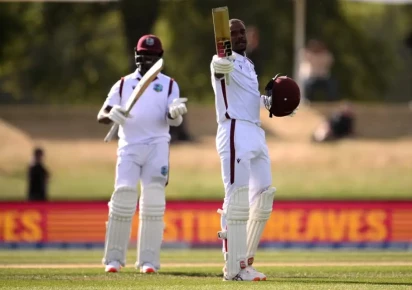
An epic 202 not out by Justin Greaves and a stubborn support role by Kemar Roach saw the West Indies salvage a valiant draw in the first Test against New Zealand in Christchurch on Saturday.

Set a colossal target of 531, 113 more than the current record for a successful fourth-innings chase, the West Indies were 457-6 at the end, the second-highest Test fourth innings.

Greaves battled for almost 10 hours and faced 388 deliveries, bringing up his maiden double century in the penultimate over.

Roach was unbeaten on his Test best of 58 which included facing 72 dot balls when he was on 53.

The pair put on a gutsy 180 for the seventh wicket.

“Kemar, the senior pro, guided me all the way,” said man-of-the-match Greaves.

“Coach told me once you get in, stay in. To be a part of history is exciting, but for me, it’s one day at a time.

“For us, it was just about getting into the last session.”

Given the magnitude of the chase, the West Indies saw the draw as a win while New Zealand felt they had lost.

“I’d say it feels like a win. The guys are proud,” West Indies captain Roston Chase said, adding they felt they the game was theirs going into the final session.

“But it didn’t quite work out that way that they (Greaves and Roach) wanted so when it came to the last hour we had a discussion and they said they would just play it out.”

However, the mood was not buoyant in the New Zealand camp.

“When you have a draw in that fashion where you know you’re so close to winning it does have that (losing) feeling,” captain Tom Latham said.

A draw seemed a distant prospect for the tourists when the top order failed to fire yet again and they slumped to 72-4.

But New Zealand were down on fire power as injuries to Matt Henry and Nathan Smith reduced their pace attack in the second innings to just Jacob Duffy and Zak Foulkes.

Both were playing only their second Test.

The placid pitch was also of little assistance to the spinners, allowing Shai Hope and Greaves to cash in for the fifth wicket amassing 196 runs in a 64-over stand.

The West Indies resumed the final day at 212-4 with a confident Hope and Greaves adding 23 in six overs of spin before blunting the new-ball attack for more than 12 overs, before Hope was dismissed for 140.

A short ball from Duffy outside the leg stump tempted Hope to hook but the ball climbed, grazed the glove and a diving Tom Latham took a stunning one-handed catch to complete the dismissal.

Tevin Imlach came and went quickly, lbw to Foulkes for four, and New Zealand felt the initiative had swung their way again with the West Indies 277-6.

But when Roach joined Greaves the pendulum swung back the other way as West Indies reached 399-6 at tea, needing a further 132 with four wickets remaining if they were to achieve a historic victory in the final session.

Luck was with Roach, who received five lives.

He was dropped on 30 and 47 and survived a run-out when the throw went wide of the stumps.

He was given not out to an lbw appeal and again for a caught behind, both off Michael Bracewell, when television replays showed he was out both times.

Duffy was New Zealand’s most successful bowler with 3-122 to go with his five wickets in the first Test.

The second Test starts in Wellington on Wednesday.

Regional Tourism & Trade Summit in Kathmandu on December 13

0

Kathmandu, Nepal | Special Correspondent:

A major regional summit aimed at strengthening South Asia’s cooperation in tourism and trade development is set to take place on 13 December 2025 in Kathmandu, the capital of Nepal. Organized by the South Asian Business Partnership, the high-level conference titled “Strategies for Tourism and Commercial Development” will bring together distinguished citizens, business leaders, policymakers and researchers from eight South Asian countries—Nepal, Bhutan, India, Pakistan, Afghanistan, Bangladesh, Maldives and Sri Lanka.

The conference will be presided over by Golam Faruk Majnu, Executive Director of the South Asia Business Partnership, whose dynamic leadership and strategic vision have been widely recognized across the region. Organizers believe that under his guidance, the summit will play a pivotal role in expanding economic diplomacy, regional trade networks and future collaborative initiatives among South Asian nations.

One of the major highlights of the event will be the presentation of the prestigious “Asian Excellence Achievers Awards 2025”, which will honor outstanding contributions in the fields of business leadership, entrepreneurship, tourism, innovation, social impact and sustainable development across Asia.

New giant long-necked dinosaur fossil discovered in China

0

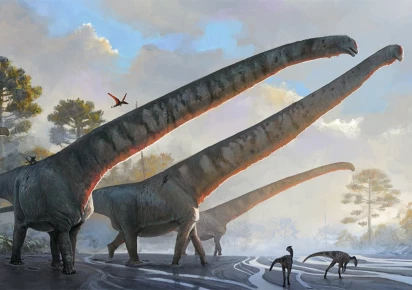
Paleontologists have identified a new species of sauropod dinosaur, Mamenchisaurus sanjiangensis, from a partial skeleton discovered near Chongqing in southwest China, a find that sheds fresh light on sauropod evolution in East Asia.

The dinosaur lived during the Early Oxfordian age of the Jurassic, around 160 million years ago. The bones were recovered from purplish‑red silty mudstones in the middle portion of the Upper Shaximiao Formation, a well-known fossil‑bearing stratum of that region.

Despite being known only from a single partial skeleton, the researchers classify M. sanjiangensis as a “diverged mamenchisaurid,” closely related to other species within the Mamenchisaurus genus. According to the study’s lead author Hui Dai and colleagues at the Chongqing Institute of Paleontology, this discovery underscores a peak in sauropod diversity during the Late Jurassic, when many non‑neosauropodan eusauropod lineages, like the mamenchisaurids, thrived globally alongside emerging neosauropods.

The dominance of mamenchisaurids in Late Jurassic Asian fossil records appears markedly different from the sauropod faunas of contemporaneous European, North- and South-American formations. This suggests that Asia, particularly what is now southwestern China, was a hotspot for sauropod diversity, especially near the middle-late Jurassic transition.

Beyond enriching the taxonomy of early-diverging sauropods, M. sanjiangensis provides critical data for reconstructing the evolutionary history and paleobiogeography of Jurassic‑era eusauropods in East Asia. The authors note, however, that many gaps remain in the fossil record, and further reexamination of existing specimens is needed to better understand the early branching events that shaped sauropod evolution across ancient continents.

The findings were published on November 25, 2025 in the journal Scientific Reports.

Punjab transporters to strike on December 8 over heavy traffic fines

0

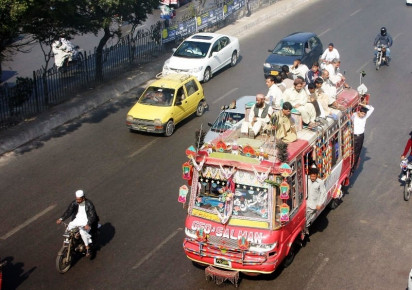
The Transport Action Committee has announced a province-wide strike on December 8 in protest against heavy traffic fines. The committee’s Rawalpindi chapter confirmed that transporters will observe a complete strike that day over the widespread issuance of penalties across Punjab.

The committee stated that in the second phase, there will be a complete strike of public and goods transport on December 10.

Meanwhile, the Islamabad Transport Federation has also announced its support for the strike. The federation’s vice president said the heavy penalties were unacceptable and that they would observe a complete strike.

The strikes oppose the Punjab Motor Vehicle Ordinance 2025, enforced by the provincial government in late November. These laws impose significantly higher fines for a wide range of violations, which include speeding, signal violations, and overloading.

They aim to improve road safety and mitigate environmental hazards across the province. However, these laws aren’t necessarily being enacted with the original intent in mind.

The traffic police issued over 76,000 challans in a 48-hour crackdown last week alone. They collected fines exceeding Rs71.2 million across the province as part of a crackdown on traffic violations, a spokesperson said.

The operation was launched under a zero-tolerance policy implemented on orders of DIG Traffic Muhammad Waqas Nazir. Police registered 1,402 FIRs for serious traffic violations and impounded over 13,000 vehicles, while 1,390 violators were imprisoned, the spokesperson said.

The fines have placed a heavy burden on drivers without significantly improving road safety. Restrictions on the movement of goods could slow the flow of essential products, creating supply bottlenecks that reduce demand and raise costs. Transport associations are calling for revised penalties to ensure smoother logistics.

  1. The planned public transport strike underscores a widening gap between traffic enforcement and drivers’ ability to keep up with rising fines. Whether authorities address these concerns or wait out the disruption will determine how the standoff unfolds.

‘My body is melting’: Textile workers describe heat hell inside Karachi factories

0

KARACHI:

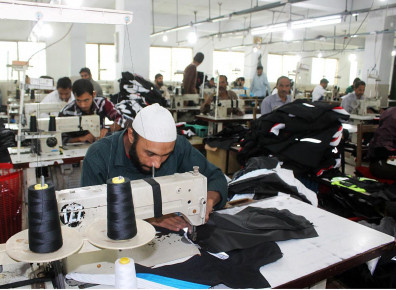
Rising temperatures driven by climate change are pushing thousands of Karachi’s textile and garment workers into dangerous heat exposure, where employees describe fainting, dehydration, headaches and physical collapse inside factories that lack basic cooling, ventilation or medical support.

A new investigative report by Climate Rights International (CRI) – “They Don’t See What Heat Does to Our Bodies”: Climate Change, Labour Rights, and the Cost of Fashion in Karachi, Pakistan – warns that many workplaces grow hotter than the temperature outside, especially during peak summer months, when machinery, fabric and body heat compound to create suffocating indoor conditions.

Factories interviewed for the study continue to maintain full production shifts even when temperatures reach extreme levels, and the workers most affected are often the ones least equipped to lose wages to illness or recovery time. “Inside, it feels like my body is melting and my heartbeat is running too fast, slowing down is not allowed, so we just push through until we can’t stand anymore,” Muhammad Hunain, a textile mill labourer described his condition on work. His statement captures what many others referenced as a constant physical negotiation: continue working despite dizziness, or stop for a moment and risk wage deduction, supervisor reprimand or unpaid time away from the machine.

The report paints a troubling picture of long hours, sometimes 10 to 12 hours per day, spent standing at machines while the air remains still and dense. Industrial units often keep windows shut to limit dust exposure, but the sealed environment traps heat and humidity. Hydration is not discouraged in policy, but in practice, many employees said water access is limited, monitored or simply too unclean to drink safely.

Heat stress symptoms described in the document include dizziness, blurred vision, nausea and swelling of legs, all medically consistent with prolonged exposure to high temperature. Researchers warn that Karachi’s labour force is already working on the frontlines of climate change, and without intervention, the human cost may escalate in the coming years.

According to the report, fainting incidents are not isolated, and recovery is typically unpaid, with workers sent home without treatment or complaint documentation. For those earning between Rs32,000 and Rs40,000 a month, even one missed shift destabilises an already fragile household budget. Researchers linked several facilities where these accounts emerged to major global clothing brands, including H&M, Zara (Inditex), GAP, Mango, ASOS, C&A, NA-KD, NEXT and IKEA, using public sourcing disclosures. All except IKEA are official signatories to the International Accord, a safety framework designed after the 2013 Rana Plaza disaster in Bangladesh, yet only NEXT currently issues supplier guidelines explicitly addressing heat risk.

H&M has signalled that heat-safety policy updates may be introduced in 2026, but for now, most factories continue under general compliance codes that do not directly recognise extreme heat as a workplace hazard. Interviews suggest many factories present better conditions during audits, temporarily increasing fans or circulating clean water shortly before inspections, masking what workers say is their daily reality.

Shaista, a garment worker in a packing department, explained how dehydration becomes a survival strategy, not a choice. “Supervisors don’t like workers going again and again. So people avoid drinking water.” The consequences extend beyond heat exhaustion: reduced water intake increases the risk of kidney complications, muscle fatigue and slowed cognitive capacity. The report notes that real-time temperature monitoring is absent in most industrial spaces, and workers have limited ways to track how much heat their bodies absorb over hours of repetitive motion. Medical rooms, where they exist, often lack trained staff, and no structured emergency response plan is documented for heatstroke-like symptoms.

Pakistan’s labour laws technically guarantee a safe indoor environment, clean drinking water and protection from occupational harm, but enforcement remains inconsistent. Karachi’s urban heat island, concrete density and population load mean the city absorbs and radiates heat longer than surrounding regions.

With Pakistan warming faster than the global average, experts warn that industrial labour will become one of the country’s most exposed people. The report argues that climate-driven heat is no longer a temporary seasonal threat; it is a structural condition reshaping factory floors, productivity and human wellbeing.

A third worker summarised the urgency with blunt honesty: “We are not asking for luxury… just air to breathe, water to drink, and a break when our bodies cannot take more.”