Thursday, January 29, 2026
Home Blog Page 22

FIA busts fake currency smuggling attempt, Rs4 million seized in Islamabad

0

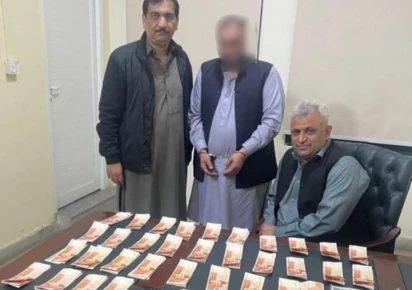
The Federal Investigation Agency Commercial Banking Circle in Islamabad has successfully thwarted an attempt to smuggle fake Pakistani currency. The operation led to the arrest of a bus driver, Ravez Khan, from Nowshera, and the seizure of counterfeit notes worth over Rs4 million.

The Federal Investigation Agency (FIA) acted on a tip-off, launching a raid at the M-1 Toll Plaza near Attock in Punjab. During the operation, officials found 800 fake Rs5000 notes, amounting to a total of Rs4 million, hidden within his clothing.

Ravez, a passenger bus driver, was en route from Peshawar to Multan at the time of his arrest. Investigations suggest he was involved in a larger smuggling network responsible for distributing fake currency across the country. The suspect had previously received counterfeit notes from a rickshaw driver in Peshawar, which he was then delivering to an accomplice in Multan.

Organised network involved

The FIA has expanded its investigation into the wider network behind the counterfeit currency operation. According to sources, the gang has been involved in smuggling fake bills for several months, with Ravez serving as a courier. For every Rs100,000 worth of fake currency he transported, Ravez would receive a commission of Rs2000.

FIA officials revealed that the gang operates across multiple cities, and Ravez’s arrest is expected to lead to further apprehensions. Authorities have already begun conducting raids to arrest other members of the network.

The FIA commercial banking circle in Islamabad has vowed to continue its efforts to dismantle the counterfeit currency operations and bring those responsible to justice. A spokesman confirmed that all available resources are being utilised to capture other individuals involved in the illegal trade.

SC orders enforcement of wedlock policy

0

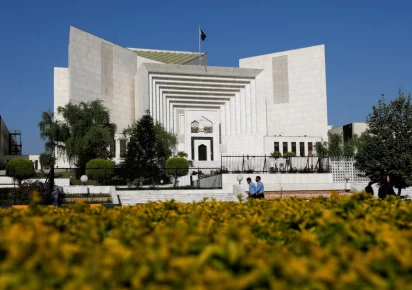
The Supreme Court has ordered strict compliance with the Wedlock Policy in order to tackle difficulties faced by married government employees and unmarried female government employees.

“As a policy directive, the state must follow it given that this policy was designed to specifically tackle the difficulties faced by married government employees and unmarried female government employees,” ruled Justice Ayesha A Malik in her 9-page judgment, she authored while setting aside a Federal Services Tribunal decision wherein the transfer of an assistant health inspector was upheld.

“In such circumstances, the government cannot pick and choose as and when the policy can be followed but must ensure that it is followed in letter and spirit to remove not only hardship but also to discourage the continued practice of issuing transfer orders without thought or sensitivity to the requirements of government employees who are married. Hence, as a matter of propriety, effort should be made to follow the Policy to avoid psychological, economical and social strains on families.”

A division bench of the apex court led by Justice Munib Akhtar has noted that the policy, in essence, requires that spouses posted at one station should not be disturbed without compelling reason of public interest and further that a request for extension beyond permissible limits may be considered with compassion, in the public interest.

“This encapsulates the objective of the state to promote family sensitive transfer practices which are designed to address the hardship faced by married government employees and unmarried female government employees,” says the judgement.

The court notes that the state is duly bound to perform its functions in accordance with the directives set out in the Constitution.

“Chapter 2 of the Constitution delineates the Principles of Policy mandating that every organ and authority of the State as well as persons performing functions on behalf of the State, must adhere to these principles.

“While the chapter does not mandate that the Principles of Policy be followed as a matter of course, it is a constant reminder to guide the state’s decision-making process.

“It places a responsibility on the State to act in consonance with the directives of the Principles of Policy and to prioritize the welfare of the people.

It sets out the priorities of the State so that it can align its decisions and actions with the Principles of Policy ensuring that the overall working of the State protects and promotes the lives and well-being of its citizens.

“Accordingly, Article 35 of the Constitution requires the State to protect the marriage, the family, the mother and the child and Article 34 of the Constitution requires the State to take necessary steps to ensure the full participation of women in all spheres of national life.”

The judgement notes that these Articles collectively place a burden on the state to ensure that it promotes the full participation of women in public service and also requires the State to protect the institution of marriage and the family for the benefit of men and women alike.

“Accordingly, the state is constitutionally mandated to frame policies which take into account marriage, family and the participation of women in public service which in this case translates into the Wedlock Policy.

“Such measures help to reduce hardships for women, promote family stability and foster greater participation of women in public service. Therefore, given that the State has issued a Policy to promote and protect the institution of marriage and family life, it is essential that the State, in line with its Policy, move away from creating structural and institutional barriers which keeps spouses apart for long periods, for no justifiable reason.

“Therefore, objections premised on convenience, tradition or rigid administrative practices cannot displace the constitutional obligation to facilitate marriage and family life and to bring about the full and equal participation of women in public service.”

The judgement has noted that the government’s common response to the policy is the fact that a civil servant does not have an absolute right to be transferred to any specific location and that civil servants agree at the time when they are appointed that they can be transferred to any place at any time during their service and that transfer orders are issued at the discretion of the competent authority.

“This in our opinion is a one-dimensional approach to the question at hand. While we recognize the fact that a civil servant does not have a vested right to demand transfer to any specific location, the Policy requires that the genuine hardship faced by spouses, be considered at the time of transfer and that unless absolutely necessary, in the public interest, married couples should be given the benefit of being able to work at the same place.

“Similarly, a benefit has been given to unmarried female government employees that they be able to work at a station where their family resides. The policy by design is made to remove the hardship of separation due to transfer and posting in a marriage or within a family and places a heavy burden on the state to work in a way that facilitates government employees, their marriage and family life.

“This means that the State must make an earnest effort to abide by its own Policy and maintain its objective. Instead, we find that the intent is the exact opposite of what the Policy sets out.

“Government employees who are married are expected to live apart for the duration of their service, because transfer is an incident of service, a routine and expected aspect of civil service and civil servants are expected to adjust to these requirements. They are reminded of their duty and obligation to abide by transfer orders which does not as of policy factor in the marriage or family life of the civil servant”, says the judgement.

The court said that “it goes without saying that the foundation of governance lies in the unwavering commitment to preserve and protect the welfare of the people. Every policy and administrative action must be rooted in the best interest of the public, ensuring that governance remains people centric”.

“This is the core purpose of the State. Law and policies designed for the betterment of the people should be adhered to and not ignored on account of reasons which negate the objective of the law or policy itself adhered to and not ignored on account of reasons which negate the objective of the law or policy itself.”

The judgement said that the policy has been issued by the government and has existed since 1998 for this very purpose, it is their responsibility to implement the Policy and its implementation cannot be left at the whims and mercy of the competent authority.

“While transfer and posting is the discretion of the competent authority it is to be made in the public interest for the benefit of all based on fairness and a lawful administrative process which reflects not only the administrative requirements of the State but also balances the needs and requirements of government employees.

“The Policy is designed to guide the transfer and posting of married government employees and is grounded in public interest serving as an impartial administrative measure, that is fair, reasonable and consistent with the rights and legitimate expectation of the employees.

“The Policy was designed with the intent to protect the institution of marriage and the family based on the hardships faced by spouses and unmarried female employees when transferred to different places. There is nothing in the Policy that places a limitation on the timeframe within which a transfer can be maintained, rather it promotes welfare and family life as the underlying consideration while issuing transfer orders. Its implementation ensures that the State is able to function effectively and at the same time ensures that all government employees can work with dignity within the ambit of their family and marriage.

“As such, we find absolutely no basis in ignoring the Policy and proceeding to transfer the Petitioner in a routine manner. The transfer order dated 08.02.2021 is, therefore, against the Wedlock Policy which, being a Policy of the State, must be complied with.”

Govt shuts door on PTI talks

0

The government on Wednesday continued to prepare ground for a decisive move against the embattled PTI, as political tensions heightened after critical remarks by a military spokesperson regarding Imran Khan, which the government has defended and linked to national security concerns.

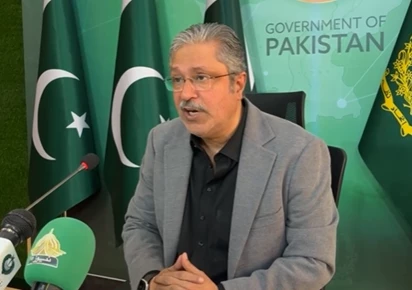
The latest salvo was thrown by Coordinator to the Prime Minister on Information for Khyber-Pakhtunkhwa Affairs Ikhtiar Wali Khan saying that “things have reached a point of no return”.

Addressing a news conference, he said the PTI had consistently targeted the institution that had brought pride to the nation at the global level.

Wali assailed the PTI for its recent actions, warning the party, “We have tolerated you with much grace and for the sake of democracy. However, things have now reached a point of no return, no mercy and no tolerance.”

“All doors to talks are now closed,” Wali said.

He went on to say that anyone supporting the incarcerated PTI founder “stood for the desecration of Pakistan’s sovereignty, honour, and development”.

“We do not want to label anyone a traitor or ban a political party,” he continued. However, he stressed that “given the current state of affairs, I ask the people what [else] can be done”.

He blamed the PTI for attacking state institutions, promoting hatred, and destabilizing the country using different means, including false narratives.

The coordinator questioned PTI’s performance during its years in power, saying that despite 13 years of rule in Khyber-Pakhtunkhwa, the party could not construct a single major hospital or university. “Which project did PTI build during its rule?” he asked, alleging that the party’s politics had harmed the younger generation by spreading hatred.

“It was a blessing from God that the Centre, Punjab, Sindh, and Balochistan have remained safe from the PTI’s dirty politics,” he remarked, warning that the government “will now set K-P free as well.”

While commenting on PTI’s recent political gathering in Peshawar, Wali said they failed to gather even a modest crowd in its Peshawar rally despite mobilising people from across the country. He alleged that the party routinely used religion for political gains and had adopted “a political approach that encourages extremism”.

He further drew a comparison between PTI and banned outfits, calling that “there is no difference between the TTP and the PTI”.

He held the PTI responsible for incidents such as May 9 and November 26, saying the party had repeatedly damaged national interests.

Responding to speculation regarding Governor’s Rule in K-P, he remarked, “If we had intended to impose Governor’s Rule, we would have done so after the November 26 incident.”

He further alleged that PTI’s social media networks were being operated from India and Israel, adding that the Indian media was actively promoting what he called the “false narrative” of the PTI founder’s family.

Concluding his remarks, he reaffirmed his commitment to national unity, declaring, “My choice is Pakistan. Long live Pakistan.”

Sharjeel Inam Memon

Sindh Minister for Information and Transport Sharjeel Inam Memon said that the events of May 9 can never be forgotten and urged political leaders to acknowledge their past mistakes for the sake of the country’s stability.

Addressing a news conference at Sindh House in Islamabad, Memon said the individual who was “brought into power through rigging in 2018” not only stole the public mandate but also failed to deliver any meaningful governance during his three-and-a-half-year tenure.

Criticising the Pakistan Tehreek-e-Insaf’s former government, he said its leaders still only speak about Shaukat Khanum Hospital and the university project, but cannot point to any major development initiative from their time in power.

He said the PTI era would be remembered as a “dark period” marked by political victimisation and attacks on democratic institutions.

The minister said it was ironic that the former prime minister was now being projected as a hero despite his past claims of having “ideal relations with the establishment.”

He questioned why the PTI leadership did not speak about democratic norms when they were in government, recalling incidents such as the Senate chairman’s election and the party’s stance during the no-confidence episode.

Memon accused the PTI government of gross human rights violations, including arrests of political opponents, media trials, and filing fabricated cases.

He recalled the arrest of President Asif Ali Zardari, and how Faryal Talpur was sent to jail on the night of Eid. “Their era was the worst form of authoritarianism,” he added.

Memon also criticised the PTI’s alleged international lobbying, claiming that foreign media outlets, including in India, readily opened their doors for the party’s leadership and family members.

He also questioned why Israel — accused globally of severe human rights violations — expressed concern over the PTI founder’s arrest.

The minister said his party does not label anyone a traitor but appealed to PTI leaders to practice responsible politics and refrain from inciting youth towards hatred and destruction.

Memon stressed that the government remains open to dialogue and believes political issues must be resolved through talks.

However, he said PTI has repeatedly refused to engage. “We still want political reconciliation, but politicians must admit their mistakes. The nation cannot forget the events of May 9, nor the attack on the residence of Quaid-e-Azam,” he said.

He said the PTI founder was neither a ‘superman’ nor had he achieved anything extraordinary. “We cannot overlook what happened to the country,” he said.

TTAP calls strategy huddle as govt turns up heat

0

An opposition parties’ alliance — the Tehreek Tahaffuz Ain-e-Pakistan (TTAP) — is going to hold a consultative conference in Islamabad on December 20-21 to discuss the political climate, constitutional matters, and restrictions imposed on visitors to meet PTI’s jailed founder Imran Khan.

Opposition parties, bar councils, and human rights organisations will be invited to the conference.

The TTAP leaders made this announcement after an emergency meeting of the alliance called in the wake a police action against PTI leaders, workers and Imran Khan’s family members outside Rawalpindi’s Adiala Jail in the wee hours of Wednesday.

Authorities allegedly used water cannons to disperse protesters, including the sisters of Imran Khan, who were staging a sit-in outside Adiala jail after being denied a meeting with the ex-premier.

In a post on X, the party said, “Pakistani authorities used water cannons to disperse Imran Khan’s sisters and peaceful PTI workers outside Adiala Jail, despite a court order allowing a meeting with the jailed former PM.

“This brutal crackdown on a peaceful sit-in violates basic human rights and freedom of assembly in freezing weather!” It also shared a video of a water cannon being used as people, bundled up against the cold, fled the scene.

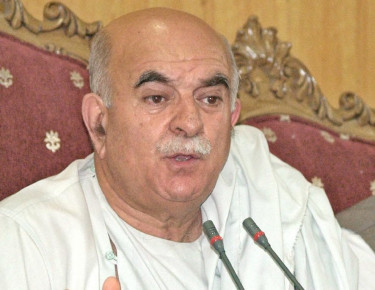
The meeting, chaired by TTAP chief Mehmood Khan Achakzai, condemned the police action, terming it a violation of court orders on visitation rights. It demanded that the government restore meeting access to Imran Khan before any talks could proceed.

Later addressing a joint press conference, Achakzai said the way the government treated PTI leaders, supporters and family members of Imran showed that the Constitution was no longer functioning.

He said if the government intended to hold dialogue with the opposition, it must restore access to the PTI founder first. “When public anger erupts, nothing remains in control,” he warned.

PTI Chairman Gohar Ali Khan said the PTI remained in parliament despite election mandate issues, but threats and confrontation had increased.

PTI Chairman Barrister Gohar reiterated his party’s allegations that their “mandate had been stolen” in the last general elections.

“We did not stage a sit-in back then […] We sat in parliament, believing that our voices will be heard, and a solution to our and the people’s difficulties will be found,” he said, adding that there had been multiple confrontations during the last two years.

But, he continued, “at some point, common sense should prevail”.

Seemingly referring to the bar on meetings with incarcerated PTI founder Imran Khan, he added: “If you keep parents in jail, […] how can the children sit together with you? And if you don’t understand this, then probably the public will make you understand.”

He again stressed that the use of force would not yield any results. “Common sense should prevail.”

Without naming anyone, he said: “If you want to create distance between [Imran] Khan and the people, this is not possible.” In this connection, he also claimed that Imran had the support of at least 70 per cent people in the country.

“Don’t enrage the people of Pakistan,” he warned, adding that “we haven’t done anything in violation of the Constitution”.

He emphasised that meetings with Imran should be allowed, pointing out that the high court had also issued an order, directing that meetings with the former prime minister be permitted.

“If you create hurdles [in this regard], then we don’t know what your intentions are. But if you get a response from the other side, the country and democracy would suffer a loss,” he warned, adding that whether the government did not want the PTI to sit in Parliament.

He also spoke to the media earlier in the day, objecting to the resolution passed by the Punjab Assembly on Tuesday.

The government, he said, was attempting to “pitch federating units against each other.”

“You are isolating a major political party. Does removing them from due process save democracy?” the PTI chairman asked.

He criticised the suspension of meetings with Imran based on PTI’s social media posts, questioning why people were not allowed to meet even Imran’s spouse Bushra Bibi, who is also detained at the same facility.

PTI’s Asad Qaiser noted that the incident showed that there is no government in the country and only fascism is reigning supreme. He demanded a judicial inquiry into the Adiala incident.

PTI’s Aamir Dogar also condemned the police action, alleging that they used chemical-mixed water on PTI lawmakers. He said a privilege motion would be filed in parliament. Junaid Akbar Khan also spoke on the occasion and questioned the justification of restricting visits over social media posts.

The PTI, he said, had also been deprived of electoral symbols and reserved seats and that such oppressive measures were increasing public resentment and damaging institutional credibility.

Earlier, a PTI statement called the incident “state-backed violence” and alleged that peaceful supporters — including women  — were targeted with excessive force.

The party claimed that media crews were pushed back to prevent coverage and that several workers sustained injuries. Earlier speaking outside parliament, PTI Chairman Gohar Ali Khan warned that ongoing restrictions could escalate tensions.

Bilawal opposes party bans, but urges responsible politics

0

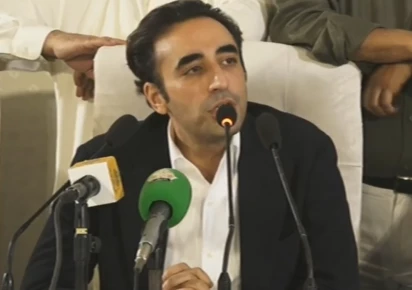
PPP Chairman Bilawal Bhutto Zardari has once again opposed the idea of banning any political party but said political parties should also adopt a responsible political attitude.

Speaking to the media after visiting the house of late senior party worker Zubaida Jafri in Baghbanpura area of Lahore — where he offered condolences to the family on her demise — the PPP chief on Wednesday said it is the government’s responsibility to give space to the opposition in politics.

“All political forces must play a serious role for the betterment of the country,” he said.

The PPP chairman, however, also indirectly criticised Imran Khan’s PTI, stating that despite the fact that Pakistan faces two-pronged threats from the eastern and western borders, “one political party” instead of standing with the armed forces against the country’s opponents, consumed all its energies in trying to run down military chiefs and hatching conspiracies through social media.

“Instead of attacking national heroes, they should focus on issues and public service,” he said.

Further doubling down on the PTI, he said the political party was trying to create a rift between the people and the army by playing the role of a “political antichrist.”

“I am free. I can criticize the government and also praise it. Someone should go and tell these people that politics is not extremism.”

He said the PTI’s politics had proved detrimental even for themselves.

He added that if any political party supported terrorists, there could be a risk of governor’s rule where the party was in power.

However, Bilawal said, he had not seen Khyber-Pakhtunkhwa (K-P) Governor Faisal Karim Kundi’s statement in this regard. The PTI rules over the K-P and the federal government has been threatening the party that imposition of the governor’s rule in the province is not out of the question.

During the talk, Bilawal also took a veiled swipe at Punjab Chief Minister Maryam Nawaz.

Expressing his lack of confidence in the Election Commission of Pakistan, he said election reform is a must before the next elections so that “no chief minister is accused of being a product of Form 47”.

The PPP chairman, a key ally of the PML-N — led government, said neither government allies nor the opposition have any confidence in the ECP.

He urged parties on both sides of the aisle to work towards bringing election reforms. Bilawal once again alleged rigging in the DG Khan elections, saying that PPP candidate Dost Muhammad Khosa had won but was not declared the winner. He vowed to fight against this injustice.

Bilawal said neither he nor his party could be accused of securing a Form 47 victory — a euphemism used to describe an establishment-gifted seat where election results are allegedly changed.

He invited Maryam Nawaz and other PML-N leaders to come and contest elections from Sindh.

Bilawal said Afghanistan was playing into the hands of anti-Pakistan forces by providing shelter to terrorists and miscreants. He said the impression out there was that those involved in terrorist activities had the complete backing of Afghanistan’s interim setup.

Later in the day, Bilawal Bhutto Zardari welcomed a former PTI leader and caretaker of a famous shrine into the party fold. Bilawal also held meetings with youth and student bodies and heard their suggestions and problems vis-à-vis improving their respective organizations.

The PPP chief is scheduled to visit Chiniot to offer condolences on the death of Hasan Murtaza’s father. His departure will mark the end of his Lahore tour, as he is expected to return to Faisalabad from where he is likely to leave for Islamabad.

He was accompanied during the visit by Punjab Governor Sardar Saleem Haider Khan, Raja Pervez Ashraf, Nayyar Bukhari, Nadeem Afzal Chan, Faisal Mir, and Nargis Khan.

Sharmeen Obaid-Chinoy wraps up latest edition of women-focused filmmaking program, ‘Story She Tells’

0

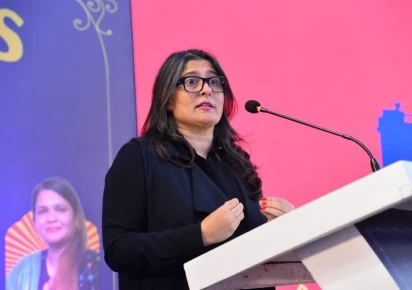
Two-time Academy Award–winning filmmaker Sharmeen Obaid-Chinoy marked the completion of the seventh edition of Story She Tells, Pakistan’s largest women-focused filmmaking grant and mentorship program. This year’s cycle brought together eight emerging directors from Karachi, Multan, Lahore, Chitral, and Quetta.

Run by Patakha Pictures, an initiative of SOC Films, and supported by the British Council and the Scottish Documentary Institute, the program hosted a gathering in Karachi where fellows premiered the trailers of their films, offering a first look at six months of work grounded in personal, social, and cultural narratives.

For the 2025 edition, participants worked in pairs, producing films that explore resilience, cultural heritage, performance, music, spirituality, and identity. The cohort was mentored by Noe Mendelle, founding director of the Scottish Documentary Institute, whose decades of documentary practice shaped the program’s instruction. The project concluded with an in-person editing and closing session.

The 2025 fellows and their films

Mah Jabeen Abid and Maryam Misal (Multan) — Malangni
A portrait of a 44-year-old Seraiki theater performer confronting fading fame and the emotional toll of life on stage.

Syeda Abqra Shaukat and Faryal Diwan (Karachi) — Saaz, Dhee, Azaadi
The story of a woman divided between Karachi and Bhit Shah, fighting for the right to pursue a musical tradition once denied to her.

Mahrosh Alam and Sana Hussain (Chitral/Lahore) — Muntazir
A look at Sundri Ji, a trans nohakhwan and dancer whose inner conflicts and devotion reveal the unseen emotional burdens of mourning.

Sumbul Khokhar and Fizza Kanwal (Quetta) — The Eagle Woman of Balochistan
A profile of Hamida, an activist whose campaign against injustice has made her a symbol of resistance in her community.

Speaking at the event, Obaid-Chinoy emphasized the need for structured pathways for women filmmakers. “I am a product of Pakistan, but a yellow brick road of opportunities took me around the world and into rooms where women like me rarely go. Because doors were opened for me, I believe in opening doors for other women,” she said.

She noted that Patakha Pictures is helping build the infrastructure young women filmmakers often lack, adding that support from partners such as the British Council, USIP, USAID, and private donors has expanded access for emerging storytellers from both small towns and large cities.

According to Obaid-Chinoy, the program’s impact is becoming visible: “Our 69 filmmakers have screened at more than 50 festivals and won dozens of awards, proof that even small investments can create significant outcomes.”

James Hampson, the British Council’s Country Director for Pakistan, reaffirmed the organization’s commitment to supporting emerging storytellers and strengthening creative ecosystems for women.

Since its launch in 2022, Patakha Pictures has supported 69 filmmakers whose work has traveled to over 70 festivals worldwide—including New York, Seoul, Montreal, Milan, and Canberra—and earned more than two dozen awards. This year’s cohort continues that trajectory, expanding the space for women-led storytelling in Pakistan’s documentary landscape.

Pakistan tells UN afghan-based terrorism poses ‘gravest threat’ to security

0

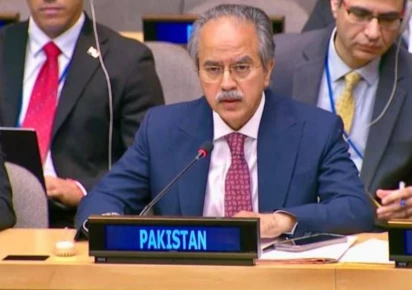
Permanent representative to the United Nations Ambassador Asim Iftikhar Ahmad told the UN Security Council on Wednesday that terrorism from Afghan soil poses the “gravest threat” to Pakistan’s security, as the Taliban support terrorist groups and allow them safe passage to operate across the border with impunity and free will.

“Afghanistan is once again a safe sanctuary for terrorist groups and proxies, with devastating consequences and mounting security challenges for its immediate neighbours, particularly Pakistan, and the region and beyond,” Ambassador Asim Iftikhar Ahmad, permanent representative of Pakistan to the UN, said during a debate on the situation in that country.

“Terrorist entities including ISIL-K, Al-Qaeda, TTP, ETIM, BLA and Majeed Brigade enjoy safe havens in Afghanistan’s territory, with dozens of terrorist camps enabling cross-border infiltration and violent attacks including suicide bombings,” he said, adding there was evidence of collaboration among these terrorist groups through joint training, illicit weapons trade, refuge to terrorists, and coordinated attacks against Pakistan using the Afghan soil.

“And not surprisingly, one detractor in the region, opportunist, and spoiler, as ever has moved fast to intensify its sponsorship of terrorist activity through material, technical and financial support, to terrorist groups and proxies active against Pakistan from Afghan soil,” the Pakistani envoy said in an obvious reference to India, whose relations with Taliban have significantly improved leading to reopening of the Indian embassy in Kabul.

Indeed, India’s speech in the Council was in sharp contrast to its past denunciation of Taliban policies. India, Ambassador Parvathaneni Harish said, “deeply values its civilizational relationship and centuries-old bonds of friendship with Afghanistan, and this history continues to guide our actions in forging deeper ties” with Afghans.

In his remarks, Ambassador Asim Ahmad, the Pakistani envoy, said that Pakistan had engaged with the Taliban authorities regularly over the past four years, but regrettably instead of seeing them take concrete, effective and decisive actions against terrorist groups, “we saw a steep surge in terrorist attacks against Pakistan; planned, financed and orchestrated using Afghan soil under their watch.”

“Just this year alone, we have lost close to 1,200 lives to terrorism emanating from Afghanistan. Since 2022, more than 214 Afghan terrorists, including suicide bombers, have been neutralised in Pakistan during CT (counter terrorism) operations”.

He linked border clashes directly to terrorism and security, and urged UNAMA (UN Assistance Mission in Afghanistan) to provide an objective assessment of border security.

Pakistan has supported the dialogue process in Doha and Istanbul, the Pakistani envoy said. But if the Taliban does not take concrete and verifiable action against terrorist groups, Pakistan will take all necessary defensive measures.

Having hosted Afghan refugees for over four decades, Pakistan also believes that Afghans should return to their country in a dignified and orderly manner, he added.

Ambassador Asim Ahmad also said that the Taliban’s continued restrictions on women and girls were “inconsistent with Islamic traditions and norms of Muslim society, as also highlighted by OIC countries on several occasions”.

Pakistan, he said, fully shares the concerns of the international community on the issue of human rights, particularly women’s and girls’ rights in Afghanistan.

“No country desires peace and stability in Afghanistan more than Pakistan,” the Pakistani envoy added, urging the Taliban to promote a conducive environment for sincere dialogue, address Pakistan’s legitimate security concerns, and come out of a “state of denial” that serves no one.

On her part, the United States’ delegate said, “Quite simply, the Taliban are not good-faith interlocutors, and they do not care about the well-being of the Afghan people.” They (Taliban) manipulate international support, ignore Afghans’ basic needs and demonstrate little willingness to meet their international commitments.

If the Taliban prevents the United Nations Assistance Mission in Afghanistan(UNAMA) from carrying out its tasks, then the Council should consider realigning its mandate to this reality, she said.

Briefing the 15-member Council, Deputy Special Representative of the Secretary-General for Afghanistan Georgette Gagnon, and the UN Emergency Relief Coordinator Tom Fletcher, said nearly half the population will need protection and humanitarian assistance in 2026.

“Women and girls remain ‘systematically excluded’ from almost all aspects of public life,” Ms Gagnon said, as the ban on secondary and higher education for girls has now entered its fourth year, depriving the country of future doctors, teachers and leaders.

“Media freedom is increasingly restricted. Journalists face intimidation, detention and censorship, reducing the space for public debate and public participation,” she added.

Afghans – both women and men – also face daily intrusions under the de facto authorities’ law on the “propagation of virtue and prevention of vice,” she added, describing a pattern of systematic interference in private life.

At the same time, humanitarian needs are surging. Fletcher, the UN humanitarian aid chief, said that nearly 22 million people will need assistance next year, with Afghanistan now ranking among the world’s largest humanitarian crises.

“For the first time in four years, the number of people facing hunger has gone up,” he warned. Some 17.4 million Afghans are now food insecure, while massive funding cuts have left the response “stretched to breaking point.”

More than 300 nutrition delivery points have closed, leaving 1.1 million children without lifesaving nutrition, while 1.7 million face the risk of death without treatment. The health system is also buckling: 422 health facilities were closed in 2025, cutting three million people off from lifesaving care.

Adding to the strain, Afghanistan has seen record refugee returns, with over 2.6 million Afghans returning in 2025 alone, bringing the two-year total to more than four million. Most arrive with few possessions and are absorbed into already impoverished communities.

“Women and children made up 60% of all returns this year,” Fletcher noted, returning to a country where women are barred from education, work and in some cases, healthcare.

Tekken star Arslan Ash welcomes baby boy

0

Pakistan’s e-sports icon Arslan Siddique, popularly known as Arslan Ash and his wife have celebrated the birth of their first child, a son.

Sharing the news on Instagram, Arsalan, regarded as the greatest Tekken player, uploaded a photo showing his hand, his wife’s hand, and their newborn’s small hand. “Alhamdulillah, blessed with a baby boy, welcome to the world, Muhammad Ayan. Our family feels complete,” he wrote in the post’s caption.

Earlier, he cemented his legacy as one of the greatest fighters of all time, capturing his sixth Evolution Championship Series (EVO) title at EVO 2025 in Las Vegas. Representing Twisted Minds, the Pakistani esports star delivered a dominant performance to win the Tekken 8 Grand Final, defeating fellow countryman Atif Butt.

Arslan advanced through the upper bracket while Atif fought his way up from the lower bracket, setting up a highly anticipated all-Pakistan Grand Final. Though Atif took the first set, Arslan responded with a dominant 3-1 comeback to secure the title. Alongside the championship, Arslan earned $12,000 and 800 tour points.

3.9 million beneficiaries enrolled in ‘Nashonuma Program’

0

The National Assembly was informed on Wednesday that 3.9 million beneficiaries have been enrolled nationwide in the “Nashonuma Program” over the past five years to address the issue of stunting.

Minister for Poverty Alleviation and Social Safety Syed Imran Ahmad Shah told the House during Question Hour that the program includes 2 million children and 1.8 million pregnant women. He said the initiative has had a significant impact on reducing stunting among children.

According to a study, there has been a 6.4% reduction in stunting among children under the age of two years, and an enormous 20% reduction in stunting among children aged six months.

The Minister added that the nutrition support program operates across 157 districts through 542 facilitation centres.

Meanwhile, Minister of State for Climate Change Shezra Mansab Ali Khan Kharal informed the House that a short-term plan has been formulated for climate action. She said 14 key interventions, to be implemented over a 242-day timeline, aim to enhance resilience ahead of next year’s monsoon season.

Shezra Mansab Ali outlined that the interventions include designing and piloting monsoon ponds in priority flood-prone districts, upgrading flood forecasting and warning systems, establishing an emergency logistics system, and integrating flood control, water management, and climate adaptation into provincial plans.

The National Assembly session concluded with the House being prorogued.

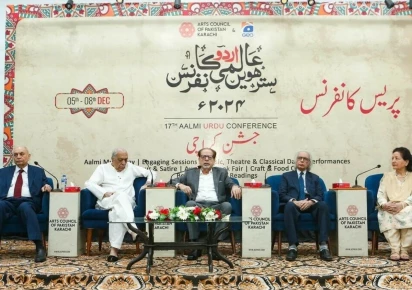
Aalmi Urdu Conference returns for its 18th edition

0

The 18th Aalmi Urdu Conference will take place at the Arts Council of Pakistan, bringing together scholars, poets, writers, and artists from around the world for discussions, book launches, performances, and cultural dialogues.

This year’s focus is Karachi’s longstanding role as a centre of literary innovation and artistic production. The conference may mirror last year’s format, which included significant representation of Pakistan’s regional languages, with sessions on Balochi, Pashto, Punjabi, Saraiki, and Sindhi literature.

Launched in 2007 as the Council’s flagship event, the conference has expanded into a global platform aimed at preserving cultural traditions and connecting Karachi’s literary and artistic landscape with broader audiences.

Last year’s edition featured writers and poets such as Anwar Maqsood and Mustansar Hussain Tarar, along with discussions on multiple regional languages. Celebrity appearances included Mahira Khan, Humayun Saeed, and Waseem Badami. An Aalmi Mushaira and tributes to late writers also drew large crowds.

The conference is scheduled for December 25 to 28 in Karachi.