Thursday, January 29, 2026
Home Blog Page 19

PSX ends subdued as KSE-100 slips 200 points amid cautious trade

0

The Pakistan Stock Exchange wrapped up Monday’s session on a subdued note, with the benchmark KSE-100 index ending slightly in the red as investor sentiment remained cautious in the absence of strong triggers to drive a decisive move.

Trading activity stayed largely range-bound with the index touching a day’s high of 172,167 and a low of 170,859, indicating a lack of strong directional conviction. Participants appeared selective, opting for stock-specific positions rather than broad-based exposure.

Sector-wise performance was mixed throughout the session. While selling pressure was largely seen in the banking, fertiliser, energy, cement, and power sectors, certain stocks such as investment and food sectors managed to attract buying interest.

Overall, the cautious stance of investors kept the benchmark confined, reflecting a wait-and-see approach ahead of clearer triggers. Subsequently, the bourse closed at 171,204 points, down 200 points (0.12%), after fluctuating within a narrow intraday range and settled at 171,204.18.

In its market wrap, KTrade Securities observed that PSX began the rollover week on a subdued note, with range-bound trading and relatively low volumes in the regular counter. The KSE-100 index slipped by 200 points, -0.12% day-on-day (DoD) to close at 171,204.

Among big chips, selling pressure was observed in Habib Bank, United Bank, Fauji Fertiliser, Pakistan State Oil, Cherat Cement, and Hub Power, while selective support came from Lucky Cement, Engro Holdings, Fatima Fertiliser, and Rafhan Maize Products, it said.

Despite the marginal decline, market participation remained reasonable, with all-share volumes recorded at 682 million shares, indicating adequate liquidity and continued investor interest. Looking ahead, the broader market outlook remains constructive on the back of improving macroeconomic conditions following the State Bank of Pakistan’s (SBP) policy rate cut.

However, with rollover activity underway amid a shortened trading week, market participants are expected to remain cautious in the near term, KTrade predicted.

Overall trading volume decreased to 684.5million shares versus previous session’s tally of 797.5million. Vale of traded stocks stood at Rs30.1billion. Shares of 486 companies were traded. Of these, 143 jumped, 288 declines and 55 remained unchanged. K-Electric was the volume leader with trading in 112.7million shares, rising Rs0.25 to close at Rs6.10.

PM Shehbaz announces Rs10m reward for each Pakistan U19 player

0

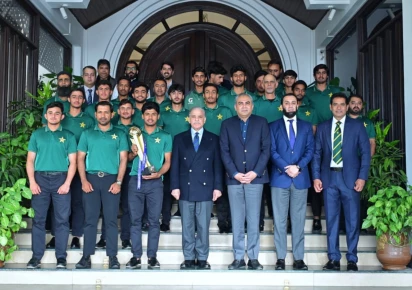
Prime Minister Shehbaz Sharif announced a cash reward of Rs10 million for each player of Pakistan’s Under-19 cricket team following their victory in the Asia Cup against India, saying the team had made the nation proud.

The prime minister hosted the victorious squad at the Prime Minister’s House on Monday, where a luncheon was held in their honour. Senior government officials, including Interior Minister and Pakistan Cricket Board (PCB) Chairman Mohsin Naqvi, Information Minister Attaullah Tarar, team players and top PCB officials attended the ceremony.

Addressing the gathering, Shehbaz Sharif praised the team’s outstanding performance, saying, “The team has raised the nation’s head with pride through its brilliant display.”

He commended the collective efforts of the players, team management and the PCB, describing their hard work as commendable. The prime minister particularly lauded the performances of Captain Farhan Yousaf, Ali Raza and Sameer Minhas, while congratulating all players, coaches and support staff for their role in the triumph.

“The entire nation celebrated your victory in the Asia Cup,” he said. The prime minister also announced that each member of the team management would receive Rs2.5 million as a reward.

Speaking on the occasion, PCB Chairman Mohsin Naqvi said the Under-19 team’s success was a moment of great honour and a historic day for Pakistan cricket.

The team captain and players thanked the prime minister for the announcement, saying they had received full support from the PCB and that the coaches had worked tirelessly during training camps to prepare the squad for the tournamen.

Iran says missile programme defensive, non-negotiable

0

Iran insisted on Monday that its missile programme was defensive in nature and designed to dissuade attack, while adding the existence of its arsenal was not up for debate.

Israel had presented Iran’s ballistic missiles, along with its nuclear programme, as the two main threats it sought to neutralise during the 12-day war the foes fought in June.

“Iran’s missile programme was developed to defend Iran’s territory, not for negotiation,” foreign ministry spokesman Esmaeil Baqaei said at a weekly press conference.

“Therefore, Iran’s defense capabilities, designed to deter aggressors from any thought of attacking Iran, are not a matter that could be talked about.”

Iran’s ballistic capabilities put Israel within striking distance, and after Israel’s unprecedented attacks that sparked the war in June, Tehran responded with waves of missiles and drones launched at Israeli cities.

According to US broadcaster NBC, Israel is growing increasingly concerned that Iran is seeking to rebuild and expand its missile production following the war, and may seek to attack it again to curtail those efforts.

During a planned visit to the US later this month, Israeli Prime Minister Benjamin Netanyahu “is expected to present (President Donald) Trump with options for the US to join or assist in any new military operations”, NBC reported, citing an unnamed source with direct knowledge of the plans and former US officials briefed on them.

Over the course of the recent war, Israel struck military sites, nuclear facilities and residential areas, killing more than 1,000 people.

Israel reported more than 50 Iranian missile strikes inside its territory that killed 28 people.

The US briefly joined its ally in striking Iran’s nuclear facilities before declaring a ceasefire.

Iran once procured much of its weaponry from the United States, but following the break in diplomatic relations after its 1979 Islamic revolution, it had to develop its own domestic arms industry.

Punjab local government polls to be held on party basis, LHC informed

0

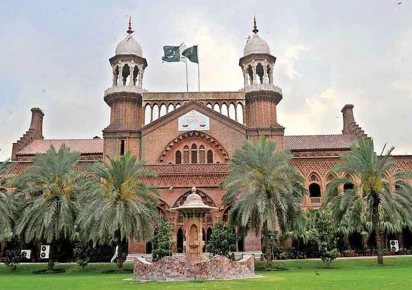
The Punjab government has informed the Lahore High Court that the upcoming local bodies elections in the province will be held on party basis, in accordance with the section 68 of the Punjab Local Government Act 2025.

The statement came during a hearing on a case challenging the legality of the Act. The court, which is hearing a petition filed by Jamaat-e-Islami for holding elections on party basis, sought clarification from the Election Commission regarding the conduct of the elections.

The government’s lawyer argued that under Section 68 of the Election Act, elections must be held on a party basis. The court, however, expressed concerns over the lack of a response from the Election Commission and adjourned the hearing until December 23.

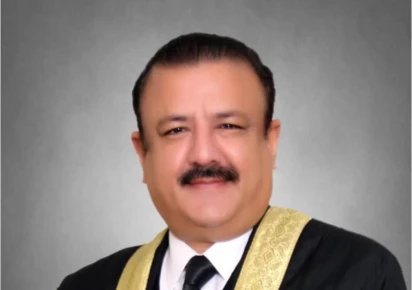
Justice Sultan Tanveer Ahmed, who is hearing the case, remarked that it is difficult to proceed with the case in the absence of a response from the Election Commission.

In the previous hearing held on December 19, Justice Sultan Tanveer Ahmed had directed the Election Commission and the Punjab government to submit their responses by Monday (today). The court three times in the past directed the Punjab government to submit a reply, but the government failed to comply with the court orders, leading to expressions of dissatisfaction from the judge.

Justice Tanveer Ahmed remarked that the government’s failure to respond was akin to wasting taxpayer money and emphasised that a response must be submitted for a decision to be made. He further stated, if the government disagrees with the court’s decision, it could amend the law.

Imran Arif Ranjha, the Election Commission’s lawyer, submitted a written response, clarifying that the commission had nothing to do with the amendments to the Punjab Local Government Act.

He explained that the commission’s role was solely to conduct elections in line with the government’s guidelines, and that the election schedule had already been issued. Ranjha requested that the petition be dismissed as inadmissible.

Petitioners challenge amendments to the Act

The petitioners, represented by Chaudhry Zulfiqar, argued that the amendments to the Local Government Act were unconstitutional, violating the principles of democracy.

They claimed that the amendments had stripped local bodies of their financial and administrative autonomy and transferred these powers to administrative officers. The petitioners also argued that holding non-party elections was a violation of constitutional rights and deprived citizens of their right to elect their local leaders.

In their petition, the petitioners requested the court to declare the amendments to the Punjab Local Government Act unconstitutional and order the Election Commission to conduct elections on party basis. They also sought an order to prevent administrators and the bureaucracy from interfering in the local government elections.

Zulfiqar raised concerns that the amendments, particularly sections 55 and 57 of the Act, granted extensive powers to administrators and the bureaucracy, including the use of government funds, which he argued contravened Articles 17, 32, and 140A of the Constitution.

Saima Anika Honored with the Asian Excellence Achievers Award-2025

0

Special Correspondent:
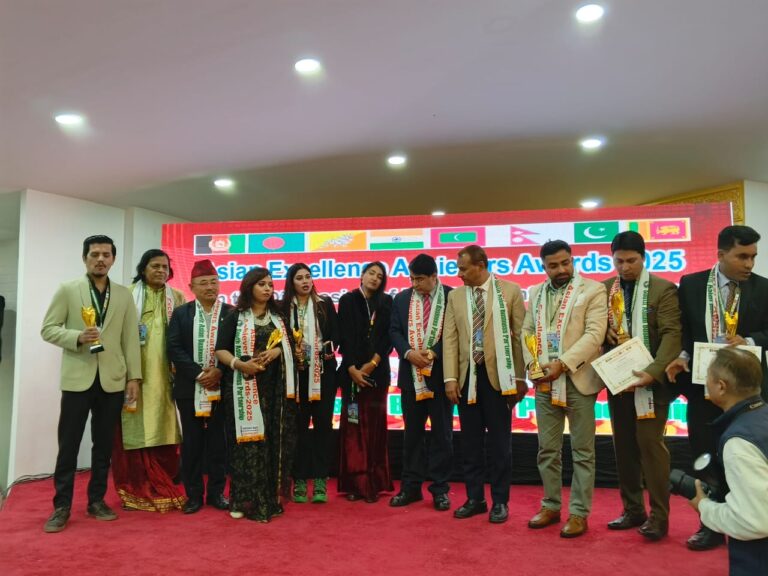
On December 13, at an international conference and award ceremony held in Kathmandu, the capital of Nepal, Saima Anika received the prestigious Asian Excellence Achievers Award. This achievement is not only a personal milestone but also a proud recognition of the leadership, capability, and potential of Bangladeshi women on the international stage.

Organized by the South Asian Business Partnership, the international conference and award ceremony took place at Hotel G Ramayan in Kathmandu, with participation from representatives of Bangladesh, India, Pakistan, Nepal, Bhutan, Sri Lanka, the Maldives, and Afghanistan. Saima Anika, a young Bangladeshi woman currently studying British law, represented Bangladesh at the event.

The chief guest of the program was Mr. Bablu Gupta, Honorable Minister of Youth and Sports of the Government of Nepal. Special guests included Honorable Minister Kulman Ghising (Ministry of Energy, Urban Development, Transport and Water Resources, Nepal), Senator and former minister A.K. Nath Dhakal, former minister Ananda Prasad Pokharel, Member of the House of Representatives Tara Lama Tamang, MP, Dr. Rinchen Chopel (Bhutan), Co-Chair of the UN CRC, Ashok Byanju, Mayor of Dhulikhel Municipality, and from Bangladesh Md. Mahfuzur Rahman, Assistant Police Commissioner, CMP. The program was chaired by Md. Golam Faruk Majnu, Executive Director of the Asian Business Partnership Summit.

Saima Anika was awarded the Asian Excellence Achievers Award in recognition of her international activities, leadership qualities, and social contributions. Alongside her academic pursuits, she is an active social worker and entrepreneur. She remains consistently involved in various social initiatives, stands by people in need, and creates employment opportunities through her entrepreneurial ventures. In addition, her articles on social and humanitarian issues play an important role in raising public awareness.
Saima Anika hails from Jatramura, Narayanganj district, Bangladesh. Her father is Kaiyum Khan and her mother is Sadia Khan. As a Bangladeshi woman, her success on the international stage has become a source of inspiration for the nation, especially for women.
Notably, Saima Anika’s achievement stands as a powerful symbol of the confidence, leadership, and social responsibility of Bangladeshi women, reflecting their strength and potential on the global platform.

Minority rights remain systemically fragile

0

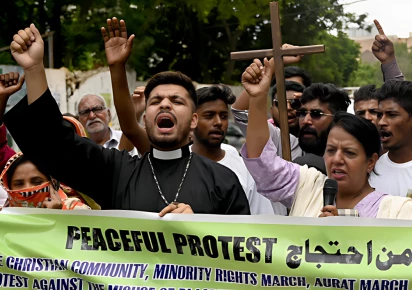
In 2025, Punjab’s record on religious minority rights reflected a complex mix of policy ambition and ground-level challenges. While the provincial government rolled out expanded budgets, welfare schemes, and legal reforms, human rights groups questioned their effectiveness, highlighting persistent gaps between official claims and lived realities.

During the past one year, the Punjab government significantly increased the budget allocated for minority affairs. Development funds were enhanced for the repair and restoration of minority places of worship including churches, temples, and gurdwaras and permission was also granted to celebrate minority religious festivals at the official level in various districts.

Punjab’s Minister for Human Rights and Minority Affairs, Sardar Ramesh Singh Arora, stated that in the education sector the government introduced 5,000 scholarships for minority students, a quota system for degrees and government jobs and a special portal established to ensure implementation of the policy. Minority students were also being prepared for the CSS examinations at government expense.

“Under welfare initiatives, the Minority Support Card project was launched in 2025, through which poor minority families were given financial assistance of Rs10,500 on a quarterly basis, along with an additional Rs15,000 on religious festivals. In 2025, the number of registered families was 50,000, which is to be increased to 100,000 in 2026. On the legal front, following the approval of the Sikh Marriage Act 2024, progress was made in 2025 toward implementing the Hindu Marriage Act 2017,” claimed Arora.

However, despite these measures, human rights activists and minority representatives maintained that ground realities remained alarming. HRCP Secretary General Harris Khalique opined that while initiatives like the Minority Card and legislation related to the establishment of the National Commission for Minorities reflected the state’s awareness of the structural issues faced by religious minorities, symbolic or welfare-oriented measures cannot substitute for effective protection of fundamental rights.

“During 2025, HRCP documented numerous cases of forced religious conversions, attacks on places of worship, and failures by law enforcement agencies to provide effective protection and justice. The true test of the state’s commitment lies in preventing abuses against minorities, holding perpetrators accountable, and guaranteeing equal citizenship to all under the law,” said Khalique.

Peter Jacob, Executive Director of the Centre for Social Justice, revealed that while the Punjab government was taking several steps, there was a need for measures that ensured sustainable economic development with respect to minorities’ fundamental rights. Preventing child marriages must be ensured, and the performance of Mithaq (Covenant) Centres needs improvement.

Concurrently, government claims regarding the protection of sanitary workers also came under scrutiny, when four workers reportedly died from toxic gas while cleaning sewers in Lahore and Gujranwala, prompting civil society to express concern over the lack of safety kits and machinery.

Minority rights lawyer Samuel Pyara stated that financial assistance alone was insufficient for religious minorities. “Without education, tolerance in curricula, and inclusion of minorities in policymaking, durable solutions are not possible. Trust cannot be restored without timely and strict action against violence and hate-based crimes,” urged Pyara.

Civil society and human rights organizations have urged the government to make protection, legal reforms, independent grievance mechanisms, and genuine representation of minority communities the focus of policies in 2026. Transparent, consistent, and inclusive implementation rather than charity-based measures is the true benchmark for evaluating government claims regarding minority rights.

44.6m children vaccinated nationwide as 2025’s final anti-polio drive concludes

0

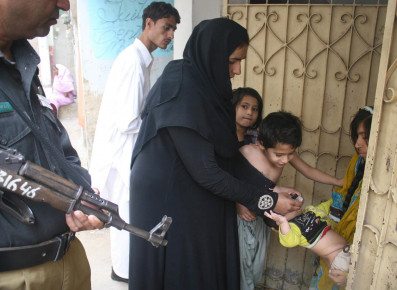
The final nationwide anti-polio campaign of 2025 has concluded successfully, with more than 44.6 million children vaccinated across Pakistan, marking a significant step in the country’s ongoing efforts to eradicate the disease, Associated Press of Pakistan reported.

According to the National Emergency Operations Centre (EOC), the campaign, conducted from December 15 to December 21, 2025, achieved its targets nationwide.

Official figures released by the National EOC show that approximately 22.9 million children were administered polio drops in Punjab, while around 10.6 million children were vaccinated in Sindh.

In Khyber-Pakhtunkhwa, more than 7.15 million children received the vaccine, whereas over 2.58 million children were covered in Balochistan. In the federal capital Islamabad, more than 450,000 children were vaccinated.

Meanwhile, around 274,000 children in Gilgit-Baltistan and over 714,000 children in Azad Jammu and Kashmir were administered polio drops.

This year’s efforts come against the backdrop of notable progress in containing the virus with 30 wild poliovirus type 1 (WPV1) cases reported in Pakistan throughout 2025 – a reduction from 74 cases in 2024, according to data from the Pakistan Polio Eradication Initiative and global tracking reports.

The National EOC expressed gratitude to parents, civil administration, law enforcement agencies, and polio workers for the successful completion of the campaign.

It said that polio workers and security personnel who performed duties during the campaign are the true heroes of the nation.

The authorities reaffirmed their commitment to eradicating polio from Pakistan through sustained and coordinated efforts.

K-P schools, colleges to observe zone-based winter vacations

0

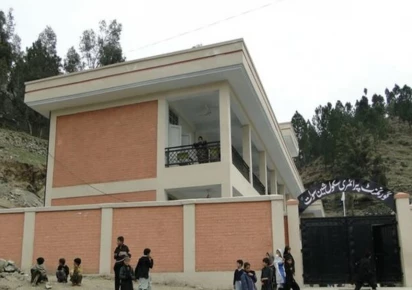
Winter holidays for Shangla and other upper regions of Khyber-Pakhtunkhwa begin tomorrow (Tuesday) as examinations conclude. The provincial government has announced holidays for all government and private schools, universities, colleges, and degree-awarding institutions.

According to the notification, the holiday schedule will be implemented based on ‘summer and winter zones’ classifications to align with the regional weather conditions.

For institutions located in the summer zone or plains, winter vacations will be observed from January 1 to 15, 2026. Given the relatively mild weather in these areas, the shorter break ensures minimal disruption to academic activities.

Meanwhile, education institutions in the winter zone, including hilly and snowbound regions, will have extended winter holidays from December 23 to February 28, 2026. The Higher Education Department stated that the longer break is necessary due to severe cold, snowfall, and travel difficulties, ensuring the safety and convenience of students, teachers, and other staff.

The department emphasised that the notification applies uniformly across all public and private institutions in the province, instructing them to strictly adhere to the holiday schedule. Education circles have welcomed the decision, noting that zone-based holidays not only maintain continuity in academic activities but also prioritise the welfare and safety of students as well as teaching and non-teaching staff.

Jahangiri faces uphill legal battle

0

Although sacked judge Tariq Mahmood Jahangiri retains the right to appeal before the newly established Federal Constitutional Court (FCC) against the Islamabad High Court (IHC) order that removed him from office, the prevailing circumstances indicate that his prospects of securing substantive relief in the near future are slim.

Since the passage of the 26th Constitutional Amendment in October last year, the judicial terrain has shifted fundamentally as the executive has increasingly gained the reins to assert its weight over the judiciary in multiple ways. Litigants with grievances against state institutions are finding it harder to obtain relief from the superior courts.

Moreover, matters have been further complicated by the 27th Constitutional Amendment, which led to the creation of the FCC as the apex court, with its first six judges appointed at the discretion of the incumbent government.

Under the law, Mr Jahangiri has 30 days to challenge the IHC division bench verdict before the FCC.

A lawyer reckons that while the sacked judge has a strong case on several legal grounds, the likelihood of immediate relief remains low in the current climate. In such circumstances, it may be prudent to file the petition and wait for a more opportune moment to press the case.

Meanwhile, Islamabad-based lawyer Waqas Ahmad says the jurisprudence in the country has not been consistent and has instead evolved with changing circumstances and the political landscape. At times, courts have adopted a pro-executive approach, while at other times jurisprudence has been more assertive, relief-oriented and inclined against executive actions, he noted.

Pakistan’s superior judiciary has long displayed an uneven and shifting jurisprudential record. At different moments, courts have validated extra-constitutional actions that were subsequently declared unconstitutional, exposing sharp breaks rather than continuity in legal reasoning.

There was also a period when the superior judiciary was accused of encroaching upon executive and legislative domains. In contrast, the prevailing perception today is that the balance has tilted the other way as other institutions exert influence over the judiciary and judges are seen as aligned with executive thinking, occupying a dominant position.

The case of former Islamabad High Court judge Shaukat Aziz Siddiqui illustrates these fluctuations. During the tenures of former chief justices Saqib Nisar, Asif Saeed Khosa, Gulzar Ahmed and Umar Ata Bandial, Siddiqui repeatedly failed to secure relief.

However, this changed under former CJP Qazi Faez Isa, when his removal was ultimately declared unconstitutional.

A similar reversal is evident in the interpretation of Article 62(1)(f) of the Constitution. During the tenure of CJ Nisar, the disqualification of lawmakers under this provision was held to be for life. That position was later overturned under CJ Isa, marking another clear departure from earlier jurisprudence.

Jahangiri was due to retire on July 10, 2027. He was appointed as an additional judge of the Islamabad High Court in December 2020 during the Pakistan Tehreek-e-Insaf (PTI) government. Prior to this, he served as deputy attorney general under the PPP government and later held the post of advocate general for the Islamabad Capital Territory (ICT) during the PML-N government.

There has also been a perception that Mr Jahangiri was not considered to be in the good books of the present regime. He was among the judges who signed a letter addressed to the Supreme Judicial Council (SJC), seeking guidance over alleged interference by agencies in judicial affairs.

Subsequently, he was appointed to an election tribunal to hear petitions concerning three National Assembly seats from Islamabad. However, during the course of these proceedings, the executive took exception, and a legislative amendment was introduced to withdraw the cases from his tribunal.

In the prevailing circumstances, securing relief appears difficult for Mr Jahangiri, as powerful quarters are seen as keen to use his case to set a precedent for other members of the judiciary.

Lawyers believe that the removal of a judge through a writ of quo warranto has a chilling effect on the judiciary. However, it is also a fact that more than 100 judges were removed through the July 31, 2009 judgment.

Advocate Azhar Sadiq says that the removal of Justice Tariq Jahangiri through a writ of quo warranto is without lawful authority, coram non judice and void ab initio.

“Article 193 of the Constitution exhaustively prescribes the qualifications for appointment as a judge of a high court, requiring only that a person be a citizen of Pakistan and possess either ten years’ standing as an advocate of a high court or ten years’ service in the judicial service of Pakistan,” he notes.

“It is undisputed that Justice Jahangiri continues to be an enrolled advocate and that his license to practice has neither been suspended nor cancelled by any competent bar council,” the lawyer says.

Azhar Sadiq further states that the Constitution does not prescribe any additional academic qualification, nor does it render a judge disqualified on the basis of an alleged defect in an educational credential.

Consequently, the essential jurisdictional precondition for issuance of a writ of quo warranto – the absence of a constitutional qualification – was never met.

Even otherwise, allegations relating to a “fake degree”, assuming them to be correct without admission, do not constitute a disqualification under Article 193 and cannot lawfully form the basis for removal of a sitting High Court judge through writ jurisdiction.

Any question of misconduct, misrepresentation or incapacity of a judge falls exclusively within the constitutional domain of Article 209 and the Supreme Judicial Council, and no other forum is competent to assume such jurisdiction.

The impugned judgment therefore, amounts to a usurpation of constitutional authority, undermines judicial independence, and is tainted by mala fides in law; it is consequently a nullity and liable to be set aside for want of jurisdiction and for being in direct violation of Articles 193 and 209 of the Constitution, says Azhar Sadiq.

Lawyers are also debating the possible outcome of the complaint of misconduct filed by Tariq Jahangiri against IHC CJ Sardar Muhammad Sarfraz Dogar.

Barrister Salahuddin Ahmed, counsel for Jahangiri, states that the complaint against Justice Dogar before the SJC remains relevant.

The fate of the complaint is also crucial for Tariq Jahangiri’s case.

Regarding the available options, Abdul Moiz Jaferii advocate says that legally, Tariq Jahangiri can file contempt proceedings against Karachi University for not disclosing how its decision to declare this degree invalid was suspended by the Sindh high court.

“He can also appeal this decision to the Federal Constitutional Court whilst also bringing into challenge the notifications that have followed the decision which de-notify him.”

Jafferi further states that practically, justice Jahangiri should focus on exposing this system and proceeding with the Supreme Judicial Council reference against Justice Dogar. “This was not a hearing in court. It was a shambolic execution and must be outed as such. The regime’s hatchet men in robes must be exposed,” he adds.


Bangladeshi Educational Institution Wins Championship at Asian Excellence Achievers Award 2025

0

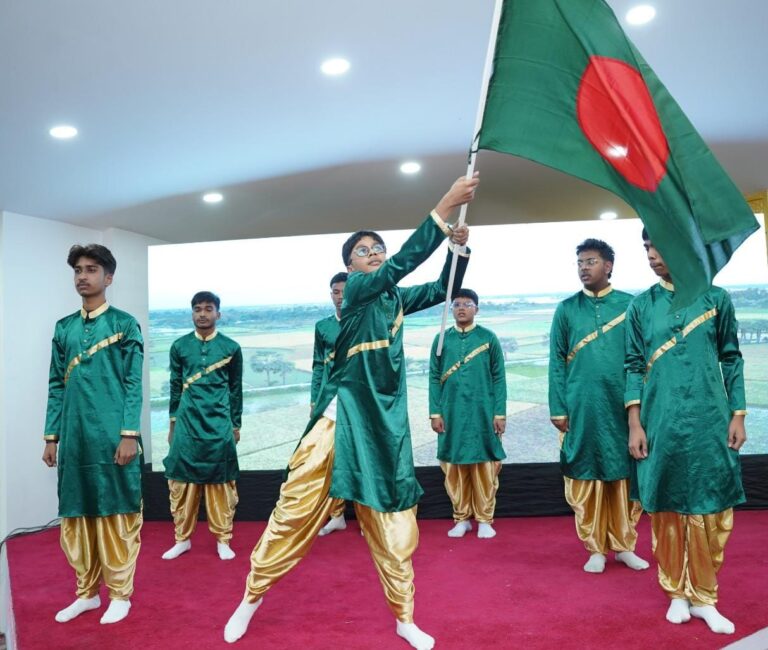
A prestigious international recognition has been achieved by Jamalpur United Public School and College of Bangladesh at the Asian Excellence Achievers Award 2025, held in Kathmandu, Nepal. The institution emerged as the Champion in Cultural Performance, outperforming teams from several South Asian countries.

The Bangladeshi team was selected for the award due to its outstanding leadership, effective guidance, and exceptional preparation of students in cultural presentation. Among the participating countries, India secured second place, while the host nation Nepal finished third.

According to the organizers and Bangladesh team leader Emran Alam Rose , the primary objective of the competition was to showcase the diverse cultures and traditions of Asian countries on an international platform. During the event, students of United Public School and College beautifully presented Bangladesh’s folk culture, traditional dances, music, and national attire, earning high praise from both the audience and the judges. Their creativity, discipline, and cultural excellence played a key role in securing the championship.

The gala round of the competition was held on Saturday evening (13 December) at Hotel G Ramayan in Kathmandu. The event was jointly organized by the Ministry of Culture, Tourism and Civil Aviation of the Government of Nepal and the South Asian Business Partnership.

At the award-giving ceremony, the Speaker of the House of Representatives of Nepal, Dev Raj Ghimire, attended as the chief guest. Special guests included Nepal’s Minister for Youth and Sports Bablu Gupta, former minister Ananda Prasad Pokharel, Members of Parliament Ek Nath Dhakal and Tara Lama Tamang, and Ashok Byanju, Mayor of Dhulikhel Municipality. The program was presided over by Md. Golam Faruk Majnu, Executive Director of the Asian Business Partnership Summit.

Speaking on the achievement, Colonel (Retd.) Rashidul Islam Khan, Principal of United Public School and College, said that the success was the result of the institution’s continued efforts to promote cultural practice, leadership development, and international exposure alongside academic education. He added that this achievement has further strengthened Bangladesh’s educational and cultural reputation on the global stage.